

Alabama Opened Eyes
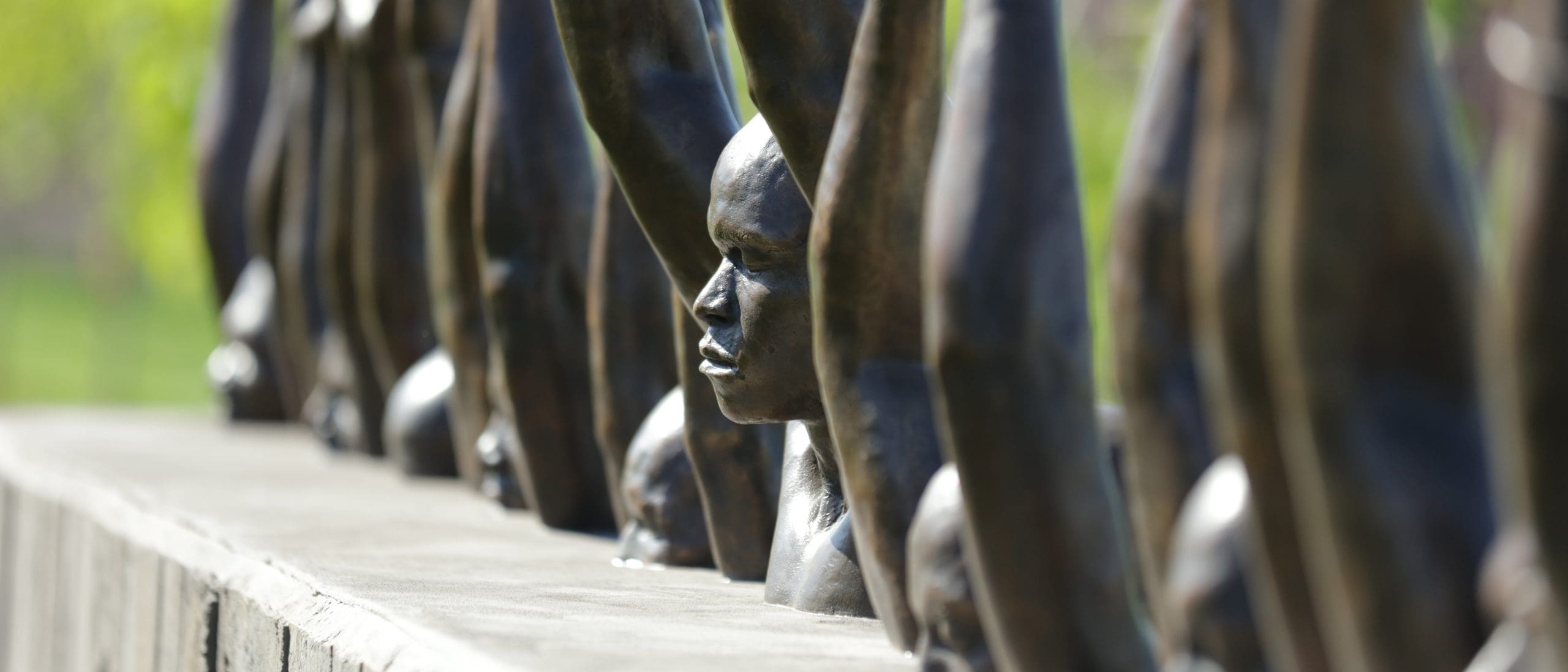
The Hank Willis Thomas sculpture “Raise Up" at the National Center for Peace and Justice in Montgomery, all photos courtesy AL Dept. of Tourism
Sponsored Content
Scenes from Alabama during the 1950s and 1960s — chilling, violent, often inspiring, and even hopeful — changed the country and the state for the better during the Civil Rights Movement. It is no wonder then that Alabama has more than 40 significant sites on the U.S. Civil Rights Trail, more than any other state.
A Civil Rights tour through the state can be an amazing education, a chance to know more about cities and towns, large and small, and brave souls, many famous, many not, who stepped forward and worked toward much-needed societal change. To enrich the experience, tap into the state’s wealth of local guides, many with personal ties to the movement. You may be inspired to become a modern-day foot soldier, making strides to preserve the hard work of the past and ensure civil and human rights remain protected.
Montgomery Made Its Mark
Alabama’s capital was pivotal to the Civil Rights Movement, so, naturally, many tours start there.
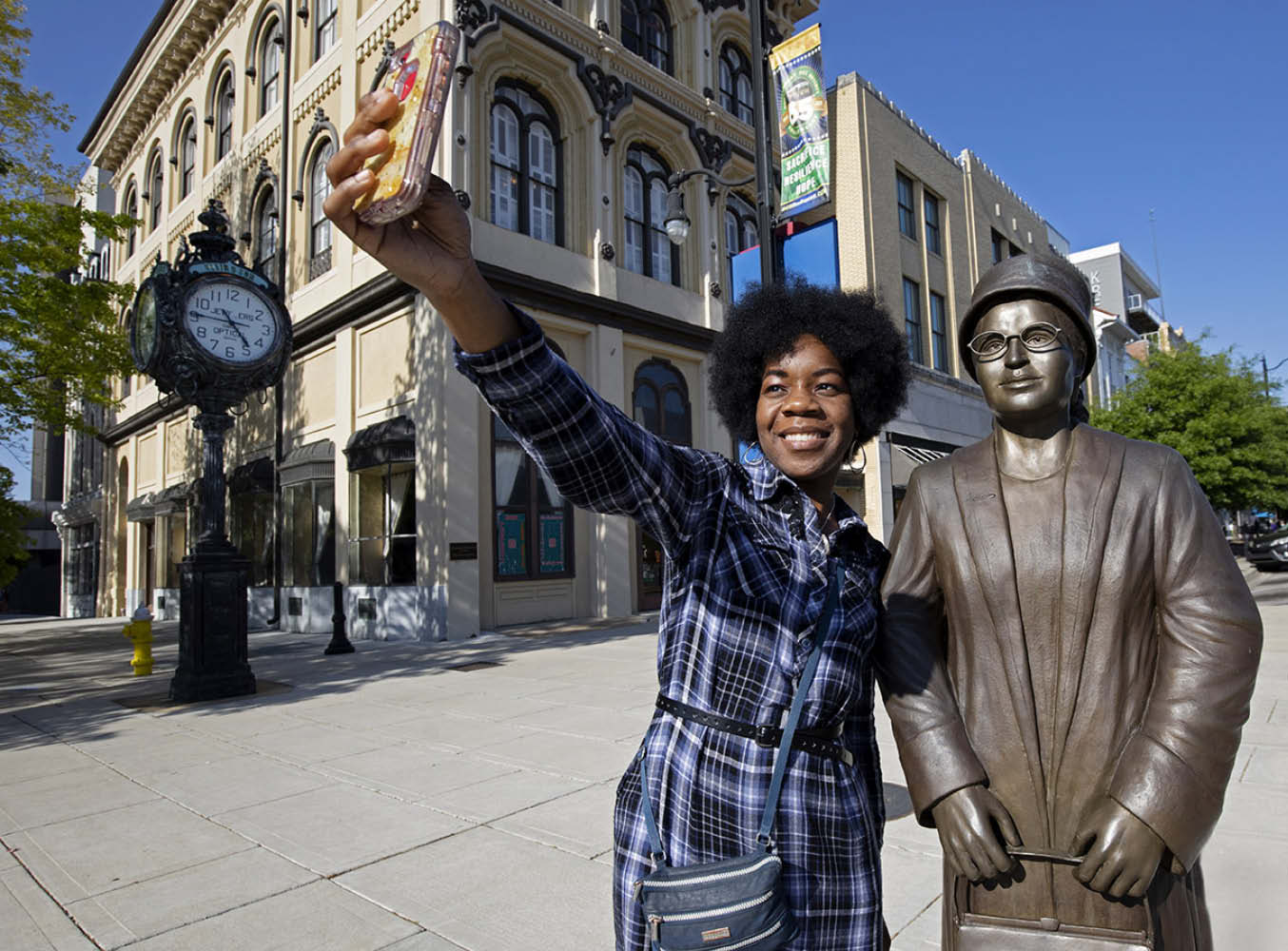
Begin by learning more about Rosa Parks and the Montgomery Bus Boycott at Troy University’s Rosa Parks Museum, the only museum dedicated to the Black woman who, by refusing to give up her seat on a public bus to a white man, helped inspire the nonviolent approach that became the foundation of the Civil Rights Movement. Artifacts like Parks’ arrest record and fingerprints, a 1955 Montgomery city bus and a 1956 station wagon used in the boycott’s volunteer carpool system bring the story to light.
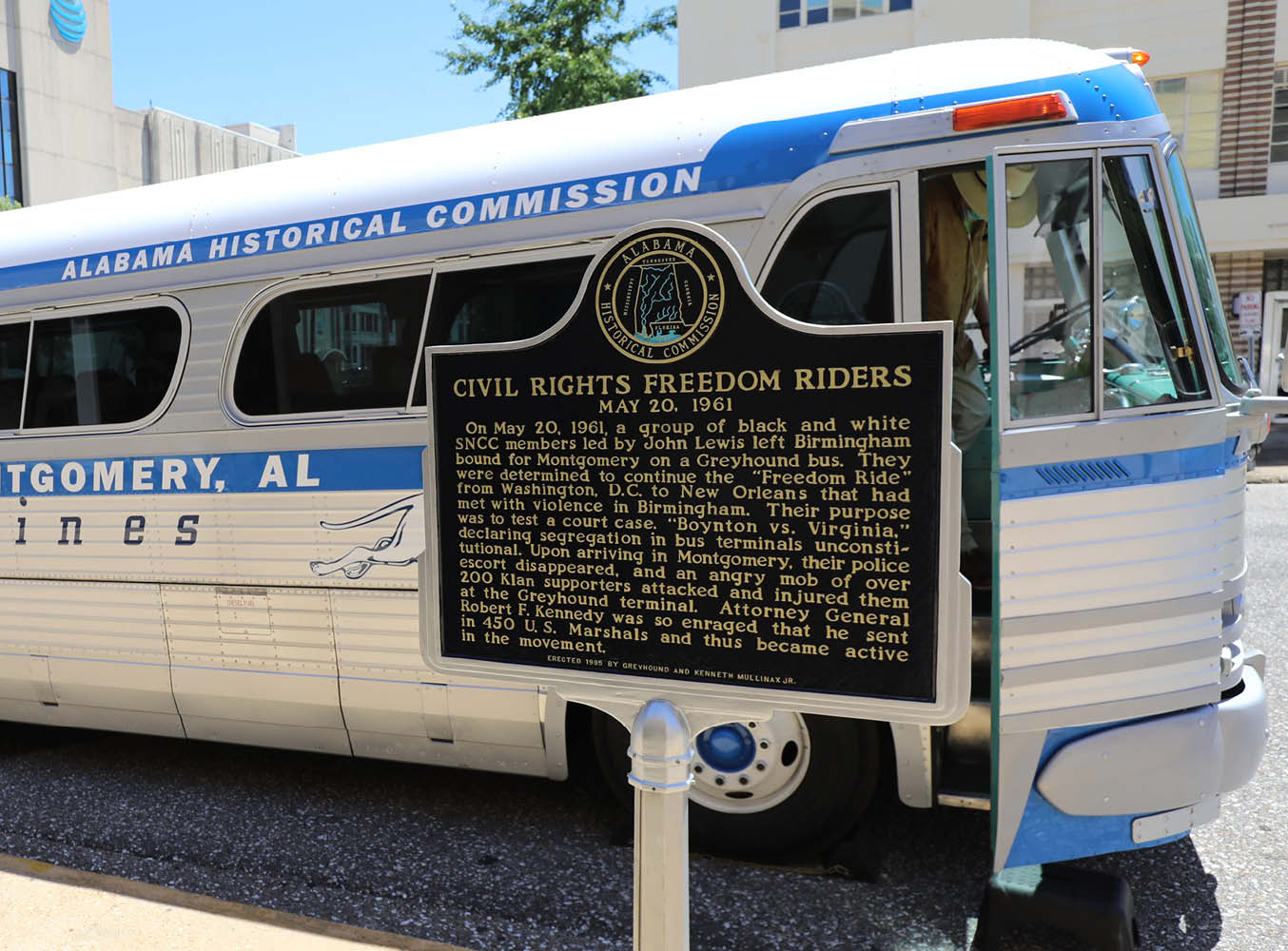
The bus boycott’s success in Montgomery led to the Freedom Riders, groups of black and white college students who boarded buses to travel together in protest of segregated interstate transportation. The Freedom Riders also made headlines in Montgomery when 20 students were brutally attacked by a white mob at Montgomery’s Greyhound Station in 1961. The station, now the Freedom Rides Museum, tells how the attacks spurred federal intervention and regulatory change so that blacks and whites could travel safely together from state to state.
Near downtown, two churches integral to the movement illustrate the importance of community involvement. On a December night in 1955, some 5,000 townspeople stood outside Holt Street Baptist Church — now a museum — to hear plans for the bus boycott. On guided tours, hear about how the church was a gathering place for organizers, but also a pulpit for a rousing young minister named Martin Luther King Jr., who was pastor at the time of Dexter Avenue King Memorial Baptist Church. That church, where King orchestrated the boycott from his office, is also a tour stop. Next door, at the Dexter Parsonage Museum, step inside the restored nine-room clapboard home where King and his family lived for six years.
Make a stop at the state Capitol, in the heart of downtown, and stand on the long flight of stone stairs, where King spoke to the thousands at the end of the Selma-to-Montgomery March for Voting Rights. Then, contemplate the many, like King, who gave their lives for the Civil Rights Movement. Maya Lin designed the Civil Rights Memorial to be touched, and visitors can trace the names of Civil Rights martyrs as water flows across its black granite surface.

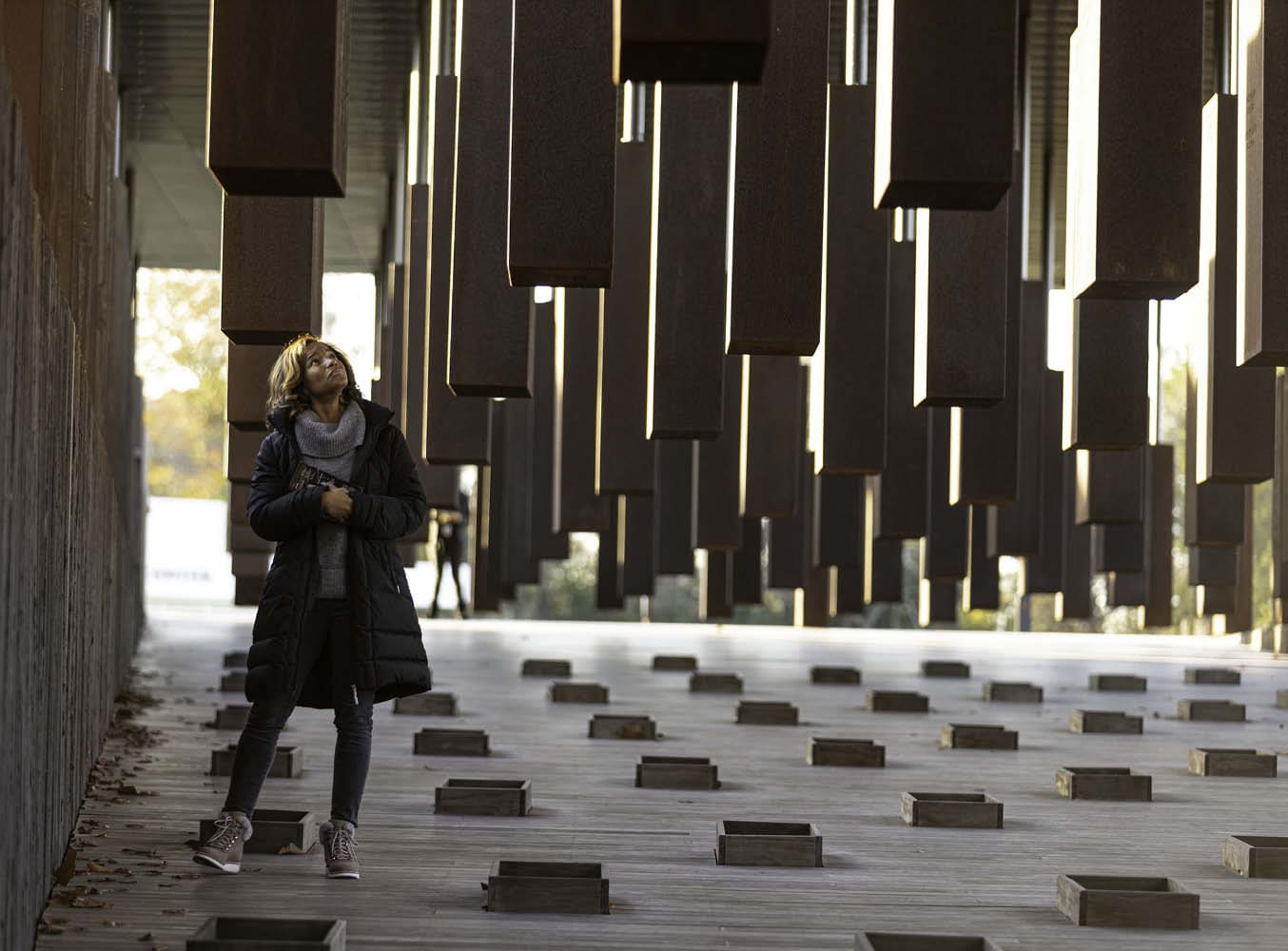
Also downtown, make time for the Equal Justice Initiative’s Legacy Sites, all connected by free shuttles. The Legacy Museum, on the riverfront, vividly tells the story and lasting impacts of slavery in America, as it promotes work toward social justice through powerful images, art, first-person narratives, artifacts and engaging interactive exhibits. Several blocks away, the National Memorial for Peace and Justice’s simple design evokes powerful emotions as it remembers the more than 4,400 African Americans who were victims of lynching. The newest Legacy site, Freedom Monument Sculpture Park, is 17 acres across the Alabama River where art along walking paths includes a new statue of Civil Rights leader and U.S. Senator John Lewis.
After a day of tours, stroll along Riverfront Park and catch a game at the Montgomery Biscuits’ stadium or have dinner and drinks in the Alley Entertainment District, the beloved Dreamland BBQ or any number of downtown dining spots.
The Road to Selma
If the tour is headed from Montgomery to Selma, the National Park Service’s Montgomery Interpretive Center on the Alabama State University campus makes a good first stop. Learn more about the last leg of the Voting Rights march and about how students got involved in it. A 20-minute film focuses on the student protests held in March 1965.
Leaving town on the Selma-to-Montgomery Highway (U.S. Highway 80), there’s time to talk about the march and what marchers faced along the rural roadway. At the route’s halfway point, a stop at the Lowndes Interpretive Center, a National Park Service site, will answer many questions while raising others through exhibits and talks about the voting rights movement. Make time for the 25-minute, 2006 documentary, “Never Lose Sight of Freedom,” before heading on to Selma.
Selma: the Bridge to Freedom and Fairness
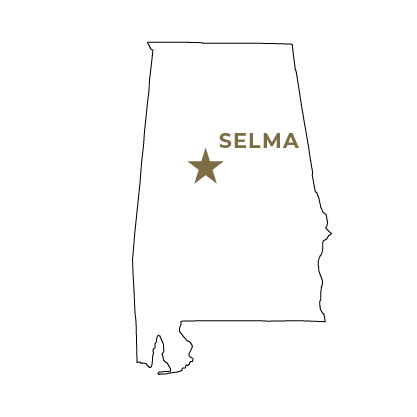
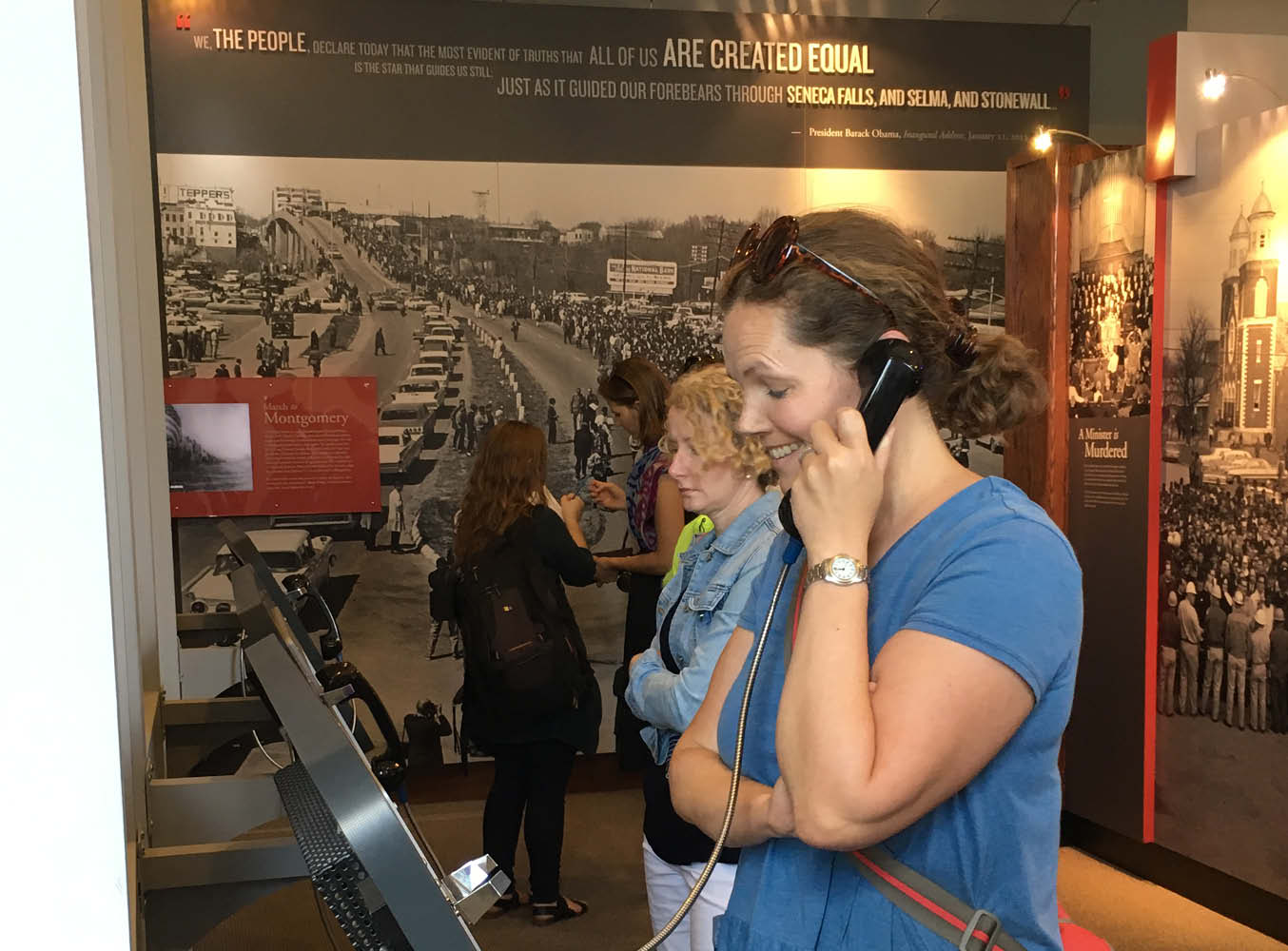
A stroll across the Edmund Pettus Bridge is a moving start to any tour of Selma. Each year, thousands walk across the span, safe from traffic in pedestrian walkways as they imagine the 600 Civil Rights foot soldiers who marched across the bridge on Sunday, March 7, 1965, toward the state capitol in Montgomery, in support of equal voting rights, only to be stopped by a vicious, violent mob of whites and law enforcement. Often, a local guide with personal ties to what is called “Bloody Sunday” leads the way, describing how two marches were thwarted by violence before some 3,000 marchers finally were able to march from Selma on March 21. Their ranks swelled to 25,000 by the time they reached the Capitol steps four days later.
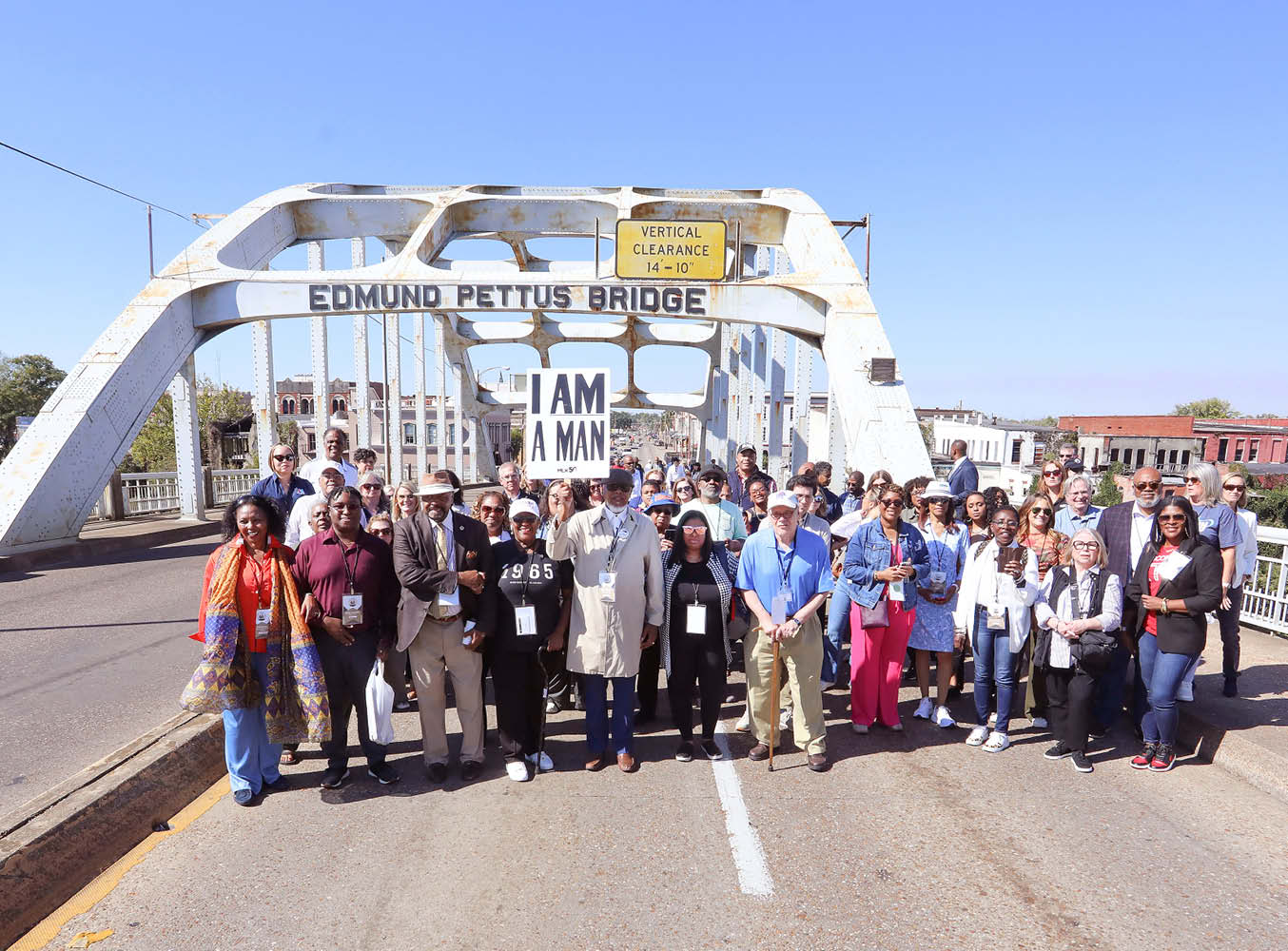
At the nearby Selma Welcome Center, National Park Service interpreters can add more context to the story. The NPS is temporarily housed there while the Selma Interpretive Center undergoes a renovation that is expected to finish in 2028.
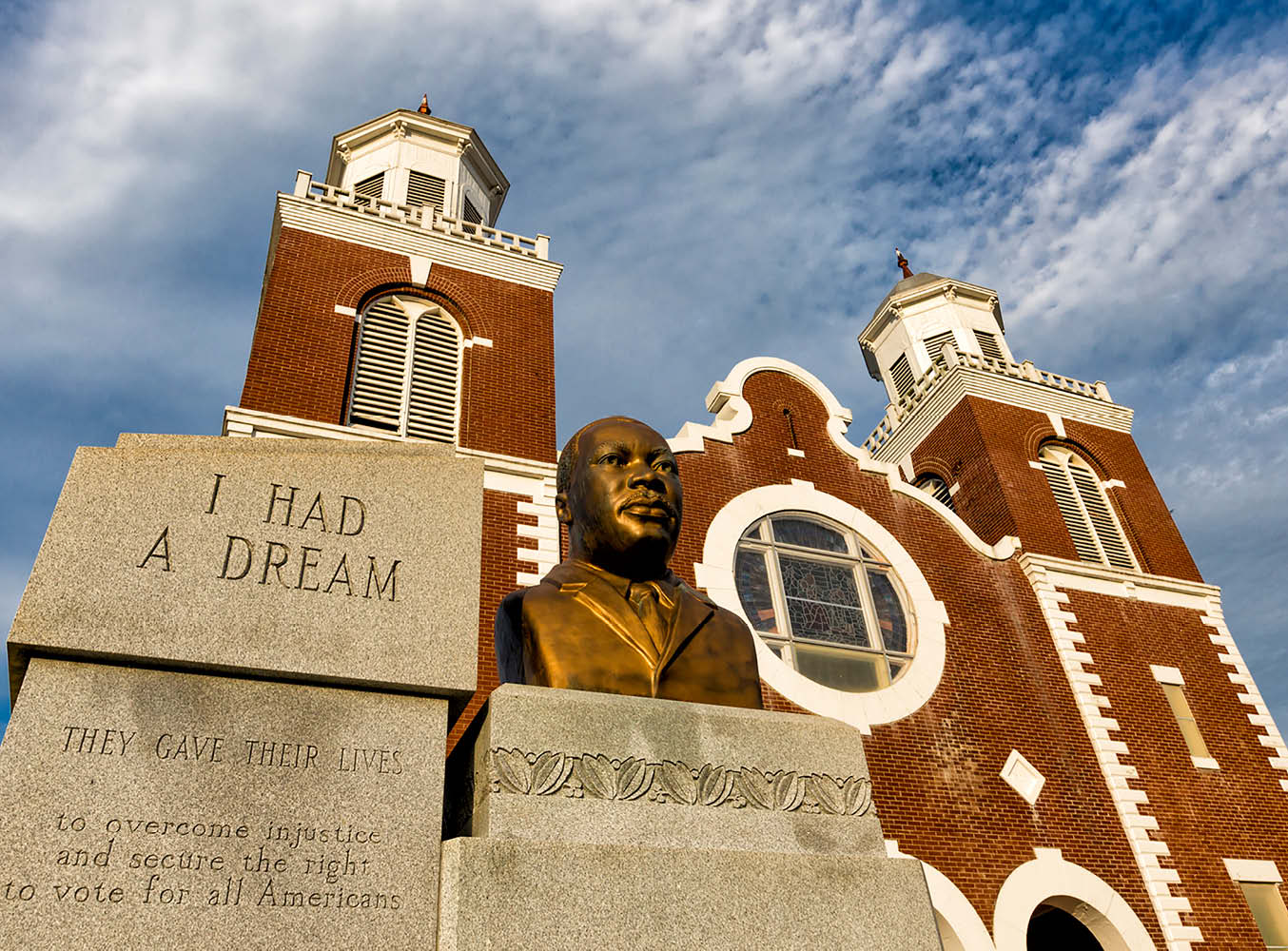
To wrap up the half-day stop, visit Brown Chapel A.M.E. Church, site of the voting rights movement’s first mass meeting in Selma. For decades, church members had been secretly holding voter registration sessions in the basement, ignoring the dangers that doing so posed. To see a collection of civil rights photos, videos, documents and remembrances gathered from local sources, tour the privately operated National Voting Rights Museum, near the Pettus Bridge.
Pro Tip: The visitors bureau has a list of guides who specialize in Civil Rights tours, including Terry Chestnut, whose father was Selma’s first black lawyer and a Civil Rights activist. Selma’s best-known tour guide, Jo Ann Bland, died in early 2026. She had marched on Bloody Sunday. Her tour company lives on.
Refuel: Lannie’s Bar-B-Que, in business for 80 years, is touted as one of the South’s best barbecue stops. At the foot of the Pettus Bridge, Reflections Coffee Shop revives body and spirit. Meet owner Jackie Smith, devoted to making her cafe a community gathering place.
Birmingham Does Not Back Down
Once the most segregated city in the country, Birmingham today is culturally diverse and cosmopolitan, known for warm welcomes and a wealth of good eating.
But don’t think for a minute it has forgotten its troubling past. The horrible scenes from Birmingham during the Civil Rights Movement ultimately helped move the country toward a better future, and that is why Alabama’s largest city puts Civil Rights front and center, starting with a four-block district downtown, the Birmingham Civil Rights National Monument. For a comprehensive understanding of the Movement and the Birmingham Campaign, visit the Birmingham Civil Rights Institute. Its exhibits of segregated classrooms, buses and restrooms drive home the inequity of those times. The Birmingham Campaign exhibit describes the peaceful protest approach activists took, and how the powerful message that the violent reaction to it helped push through the passage of the Civil Rights Act of 1964. Just across the street, handsome sculptures depict protestors — many of them children — who were attacked by police dogs and sprayed with high-powered water hoses during peaceful protests in Kelly Ingram Park, now a quiet green space.
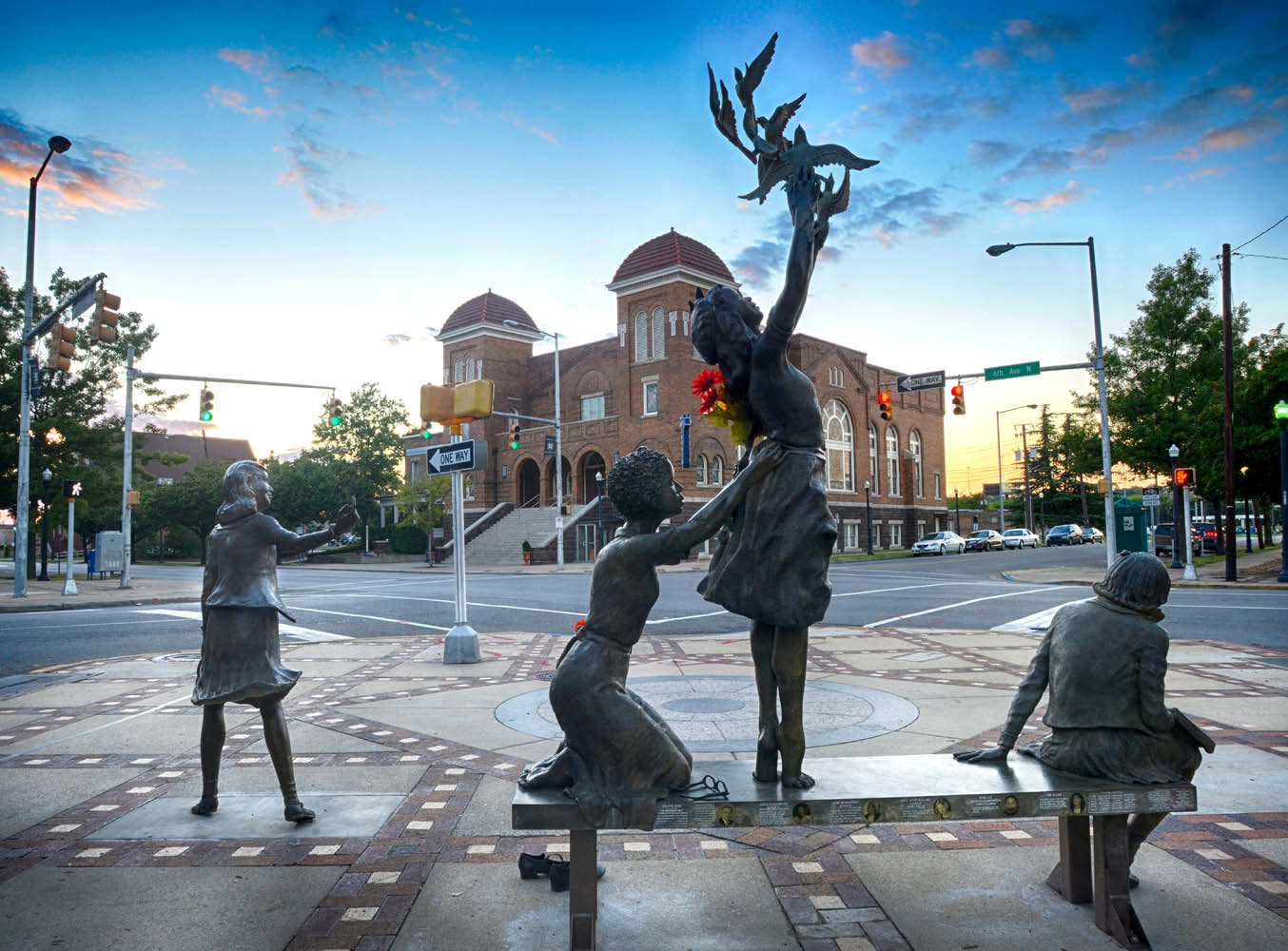
Nearby, the 16th Street Baptist Church is the site of another violent chapter in the Birmingham campaign. Hour-long guided tours are sobering as they detail the Sunday morning in 1963 when a bomb planted by white supremacists tore through the church and killed four young girls, dressed for church.
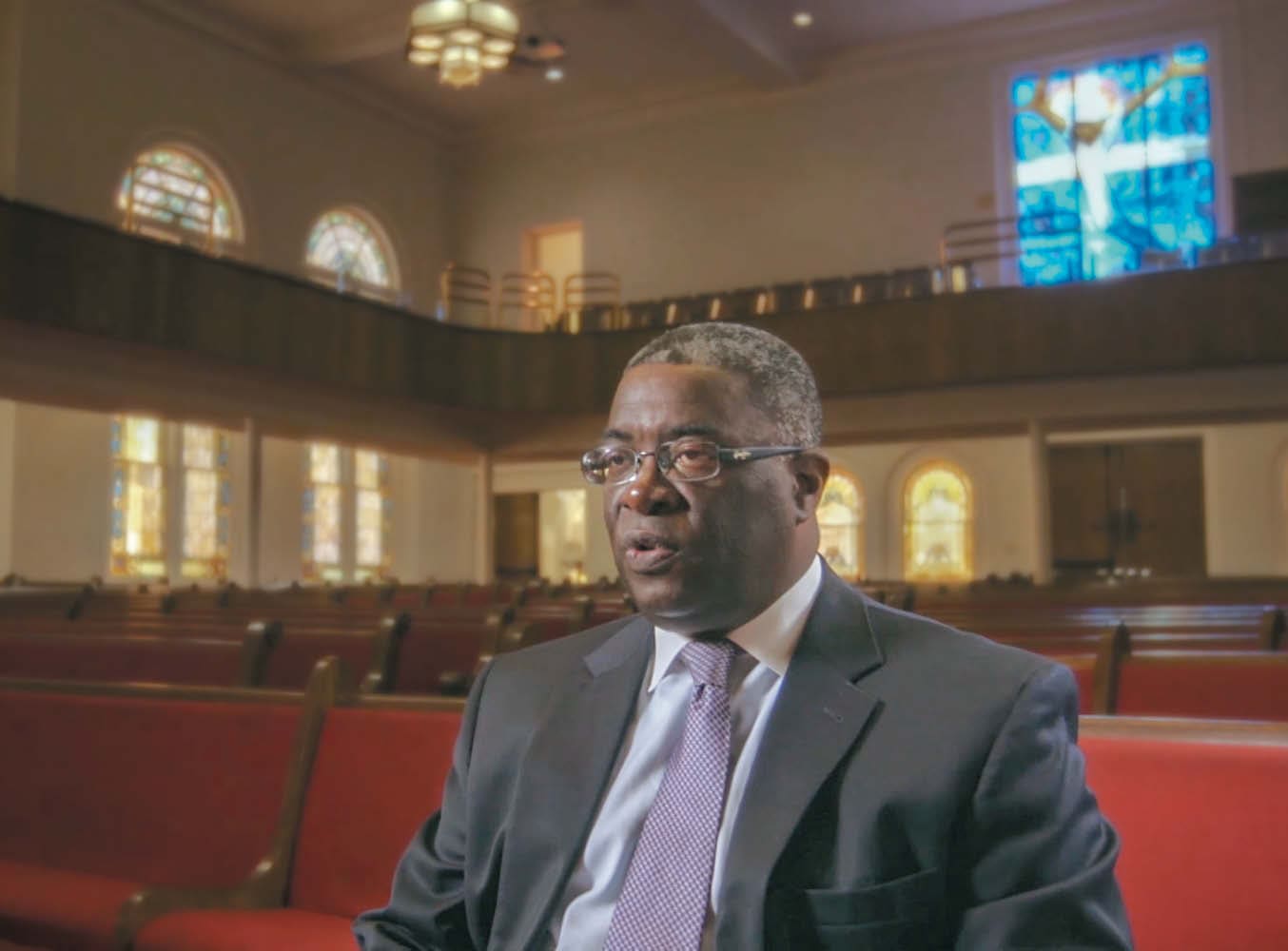
Until recently, visitors simply walked past the A.G. Gaston Motel, where civil rights leaders stayed and met in a guest room dubbed the War Room. Now, they can have a cup of coffee in the motel’s restored coffee shop and visit a small museum that tells the story of Dr. A.G. Gaston, a black entrepreneur who opened the hotel so Black travelers would have a safe, nice place to stay and meet in a time when segregation severely limited their options.
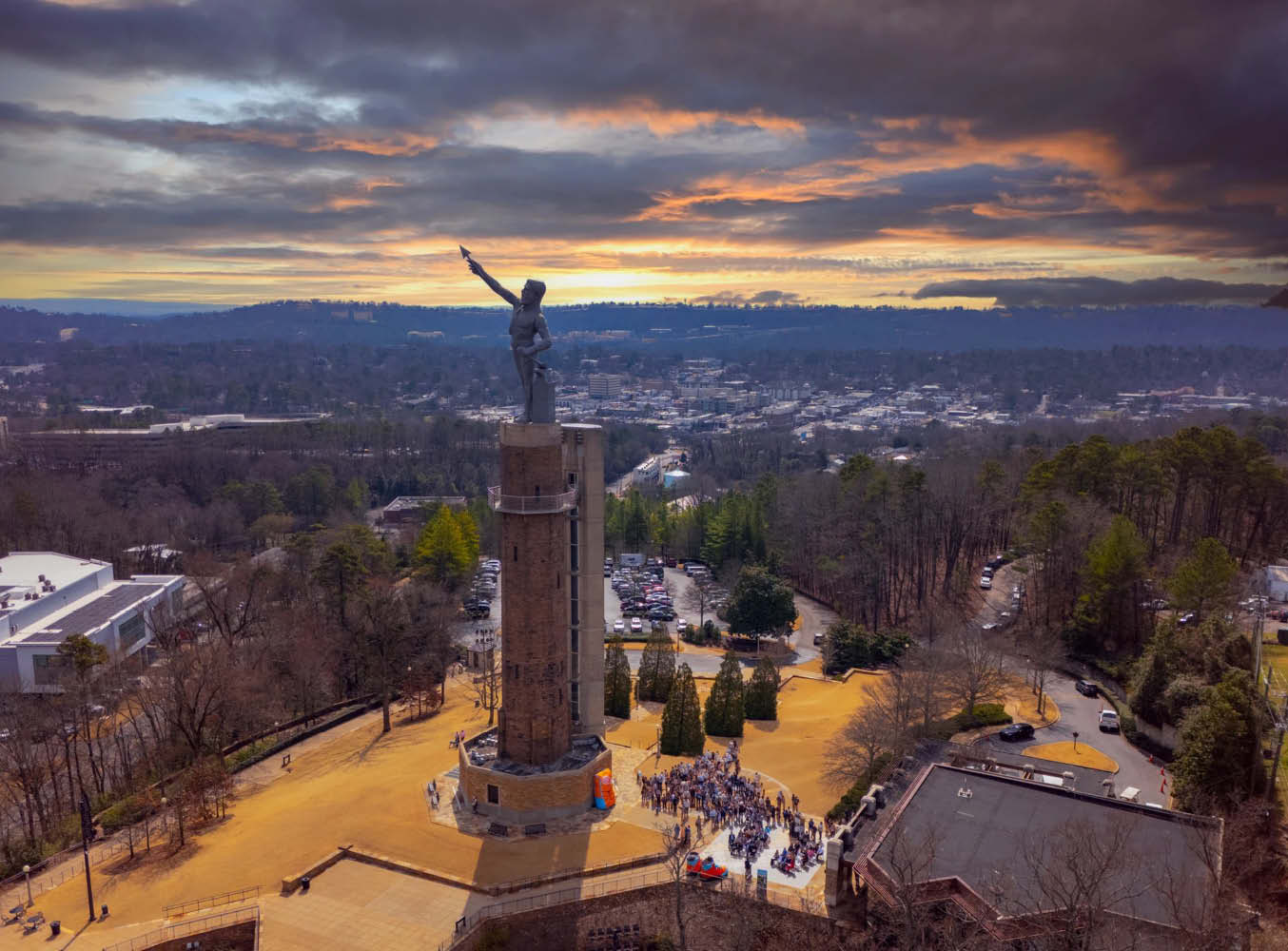
Drive time: Birmingham is blessed with many local guides and the visitors bureau has a list. A driving tour can head to Dynamite Hill and learn about bombings that erupted in this white neighborhood when black families moved in the 50s — more than 50 bombings in 20 years. Travel to the top of Red Mountain to Vulcan Park, where the iron Vulcan statue has loomed over the city since the 1930s, and special exhibits like this year’s Revolutionary Roots share more of the city’s story.
Refuel: Birmingham’s called the “Dinner Table of the South,” so finding a good meal is a snap. Downtown, dig into biscuits and gravy at Fife’s, proclaimed one of the South’s best breakfast stops by Southern Living. Michelin finds a lot to love in the city, including Bottega, Automatic Seafood and Oysters, OvenBird, Pizza Grace, Hot and Hot Fish Club, Current Charcoal Grill, Bayonet, and LaFete. For Southern specialties buffet-style, try Niki’s West. K&J’s Elegant Pastries has become famous for cupcakes and Kolossal Milkshakes.
Tuskegee’s Gift Was Knowledge
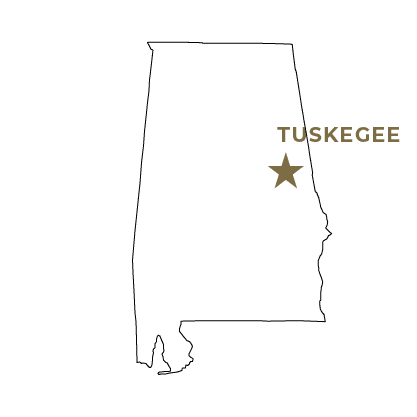
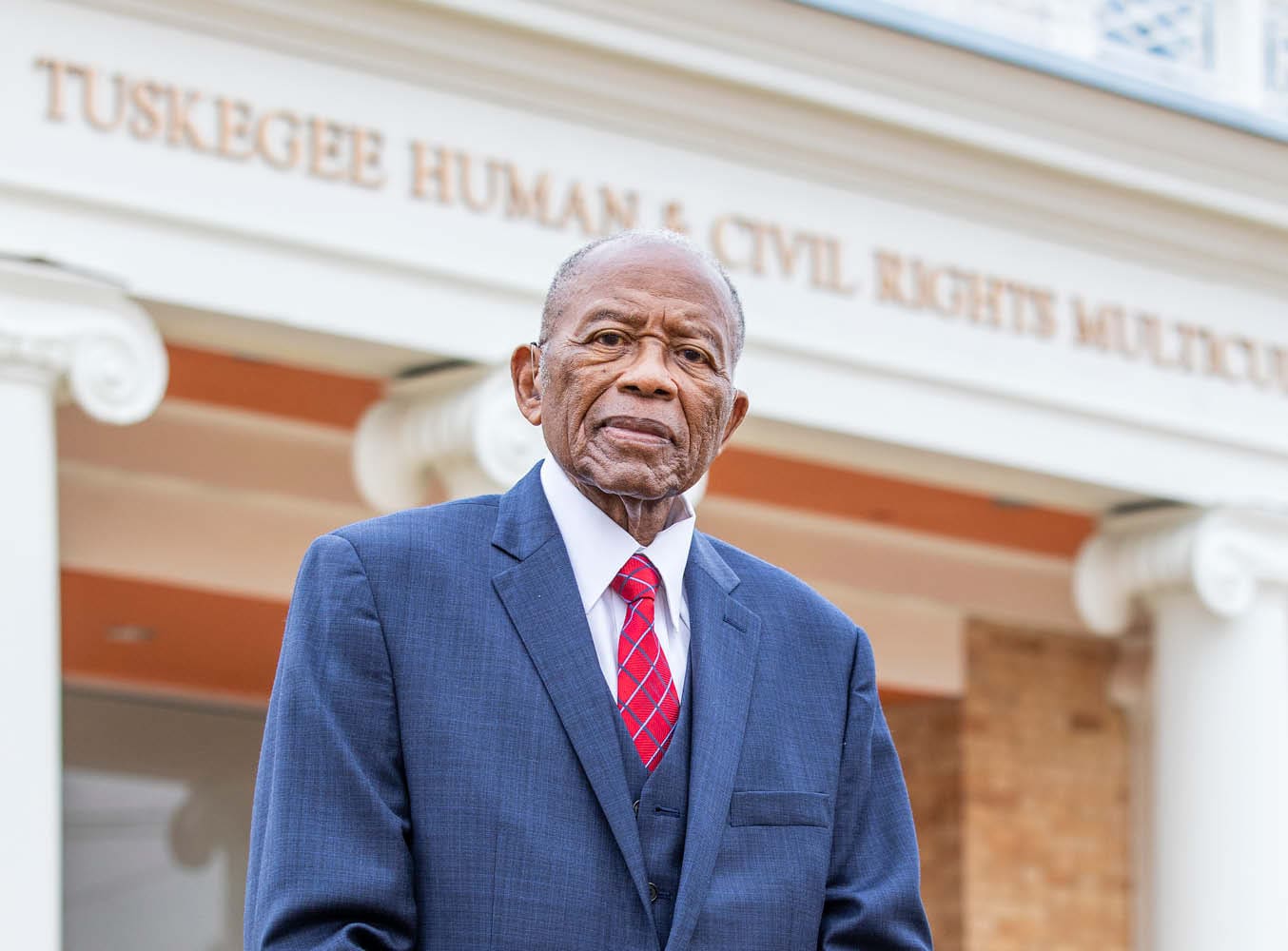
Tuskegee’s role in the Civil Rights Movement was as a teacher and trainer of African Americans, who’d had few educational opportunities before Tuskegee University opened in 1881. A tour of this campus, the only one in the U.S. designated as a National Historic Site, delves into the many ways Tuskegee taught and trained African Americans in its role as one of the nation’s first historically Black colleges and universities.
Popular stops are the George Washington Carver Museum and The Oaks, home of school leader Booker T. Washington. The school’s important contributions in education, medicine and science share a spotlight with the story of the bold fighter pilots, as well as navigators, mechanics and instructors, who trained at its Moton Field. The story of the Tuskegee Airmen is vividly told at the National Park Service’s Tuskegee Airmen National Historic Site. The airmen’s importance went beyond their successful combat missions, as visitors learn that the prowess and dedication that the airmen demonstrated as they fought fascism abroad and racism at home convinced the federal government it was high time to desegregate the military.
Scenes from Anniston Inspired Action
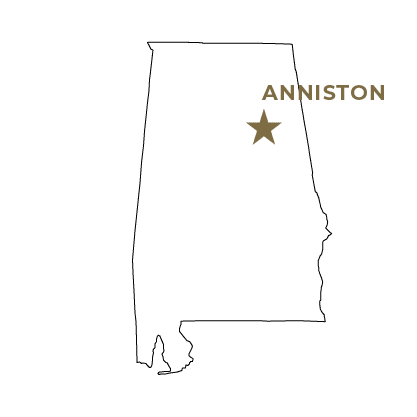
The Freedom Riders campaign was forever tied to Anniston on May 14, 1961, when white segregationists armed with pipes and bats attacked two buses carrying black and white college students whose goal was to end segregation on interstate transportation. Scenes from Anniston spurred many to join the Freedom Riders and the Civil Rights Movement.
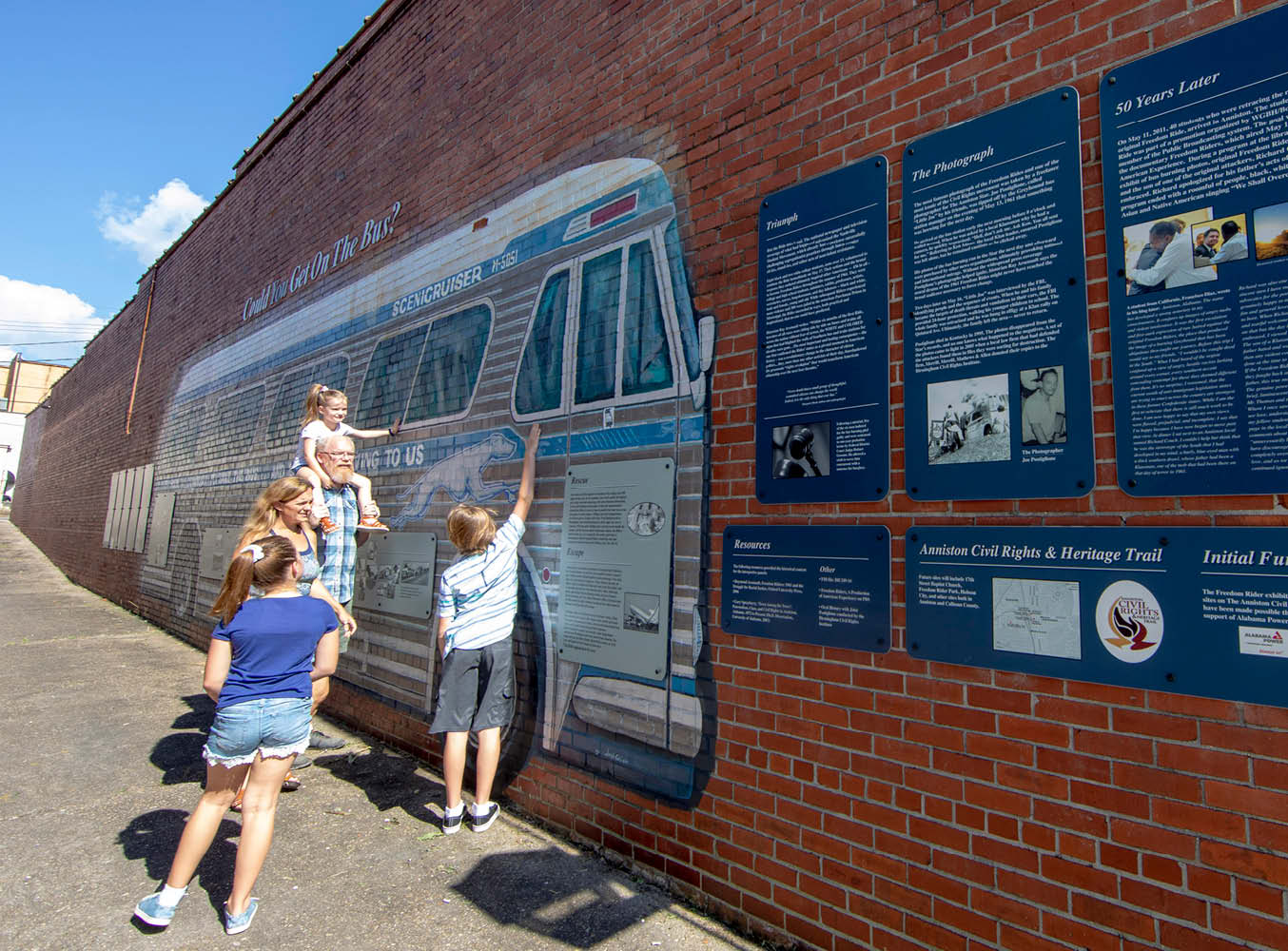
Today, the National Park Service operates the former Greyhound Bus Terminal, where the first attack occurred, and the site along the road six miles away where the same bus was firebombed. At the Greyhound terminal, murals depict the incidents, exhibits describe the young activists who risked their lives, and park service rangers describe the attacks and Anniston’s impact. The Trailways Bus Station, where another bus was attacked the same day, is also a stop on the U.S. Civil Rights Trail and the Anniston Civil Rights Trail, which spotlights 10 Civil Rights sites, including the city’s black business district and churches where civil rights organizers met. Locals created the trail to ensure that stories of bravery and courage were not forgotten.
Refuel: Barbecue rules at two spots: Dad’s and Betty’s.
Scottsboro Boys Case Was The Start
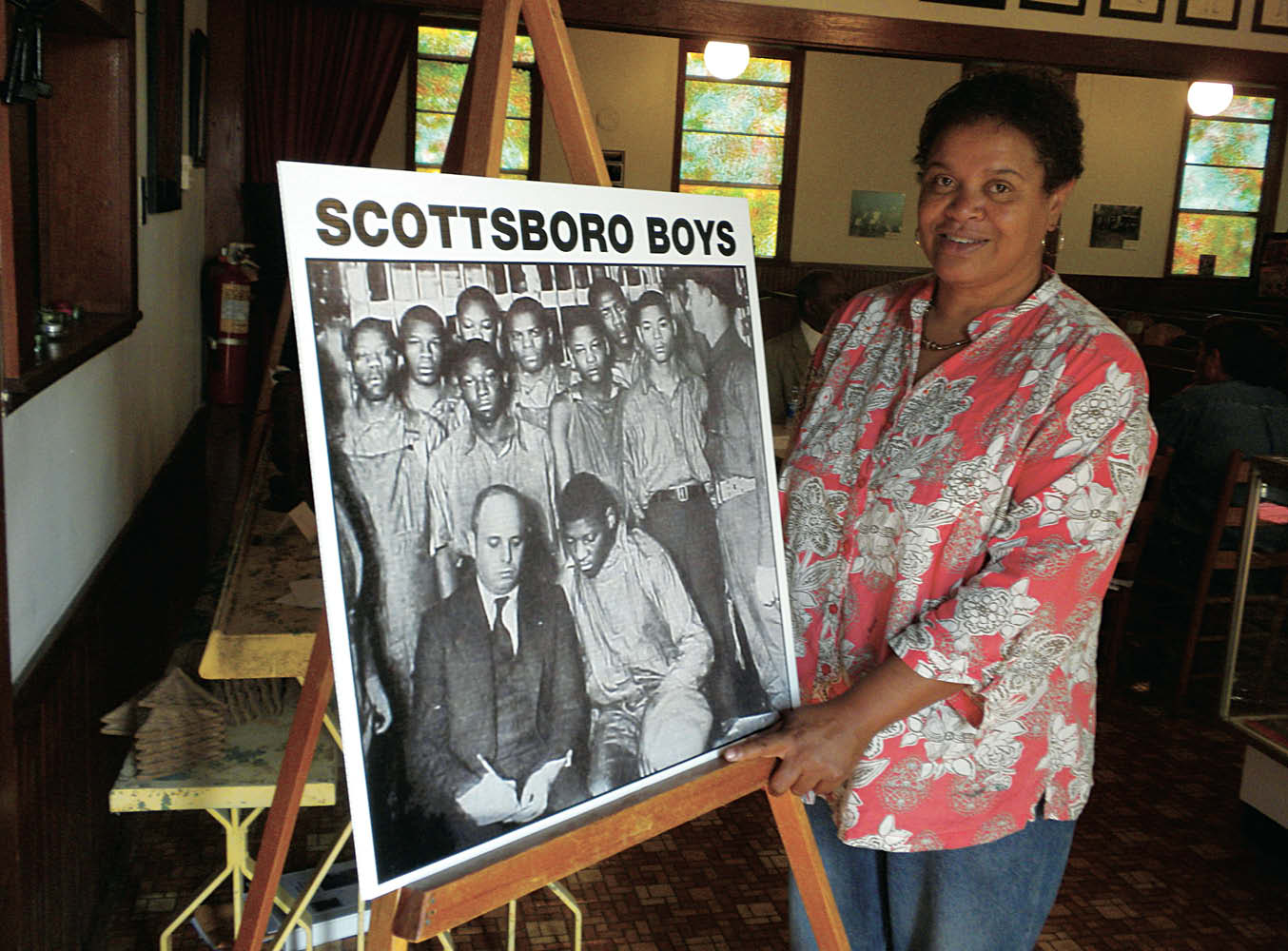
In March 1931, a story unfolding in tiny Scottsboro gripped readers around the world. Nine African American teens, arrested and charged with raping two white women on a train in northern Alabama, were put on trial and, within two short weeks, convicted by a jury of white men. Their guilt was later disproved, but not until they had spent a collective 102 years in prison. Many consider the Scottsboro Boys case the start of the Civil Rights Movement. To make sure no one forgets the injustices the boys and Black Americans faced, locals founded the highly regarded Scottsboro Boys Museum, an impressive collection, which is, as one visitor described, “a horrible story, told really well.”
Refuel: Seniors flock to Payne’s Soda Shop on Thursdays for nickel scoops on Senior Scoop Day. With its checkerboard floors and red vinyl stools and booths, Payne’s is a step into a past full of sodas, shakes and daily specials like grilled cheese and hoagies.
Want More Southern Flavor? Head to These Three Cities
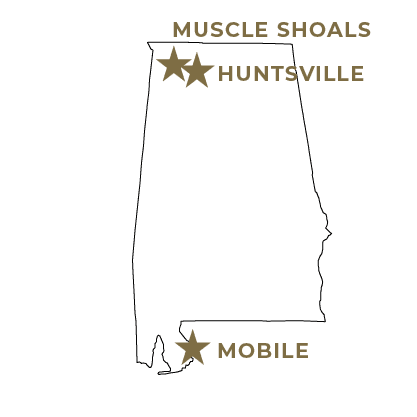
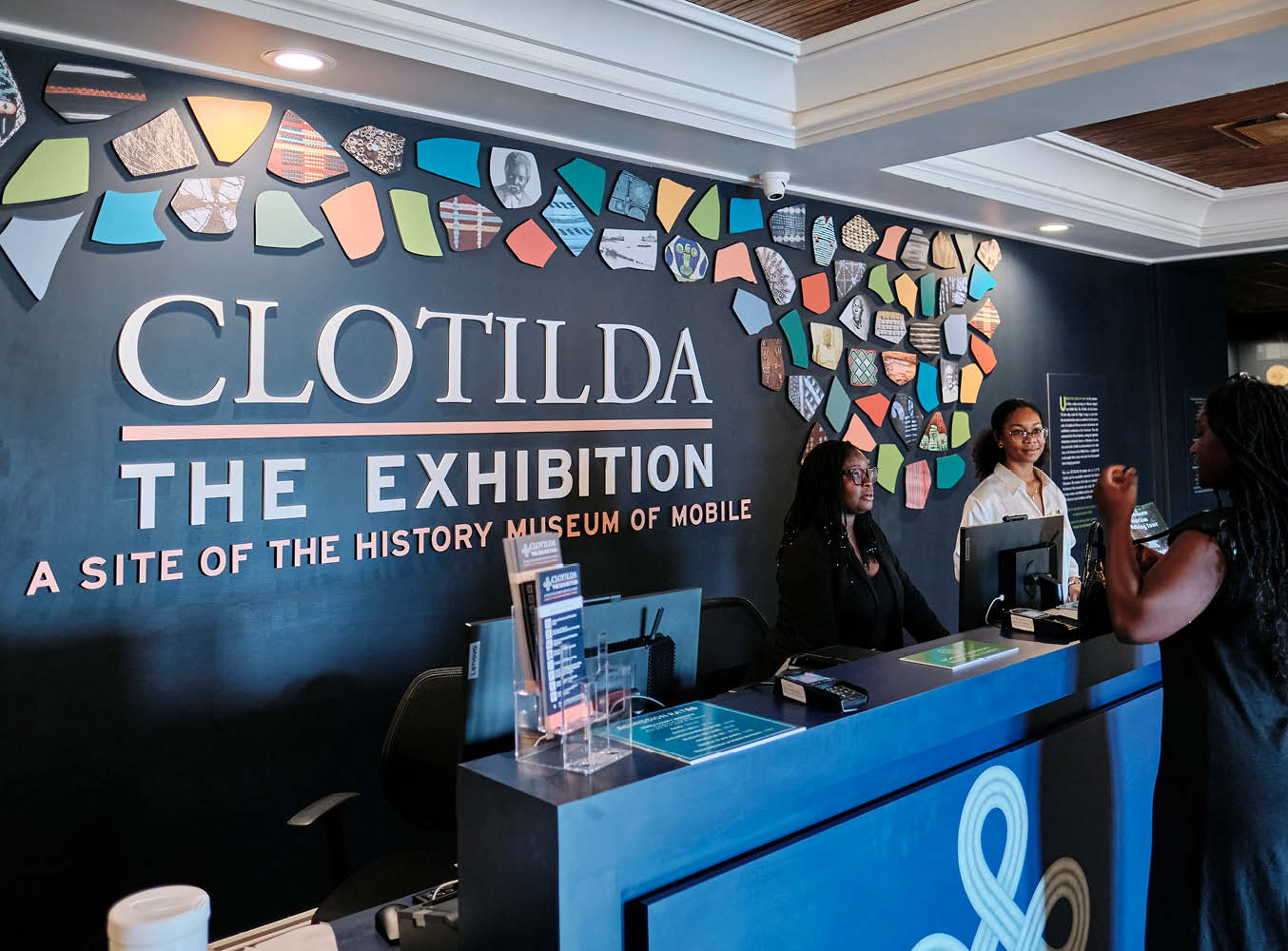
In Mobile, 300 years of history await beneath swaying palms and Spanish moss. Travel, with a guide, through seven national historic districts or to Africatown, where enslaved Africans who arrived aboard the Clotilda settled. See how sailors lived aboard the USS Alabama, a World War II battleship that was about to be scrapped before Mobilians stepped in to save her.
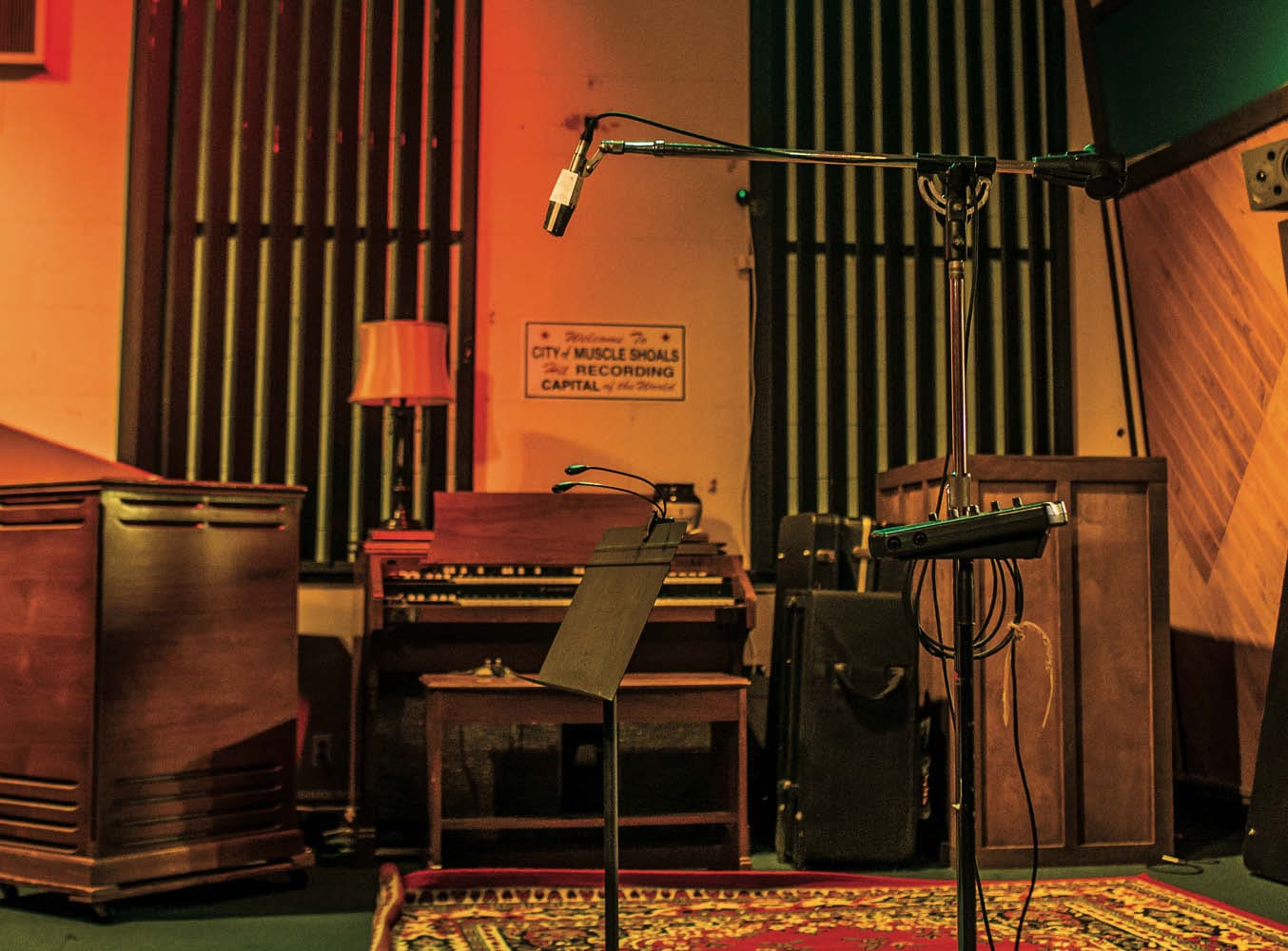
Stops in and around the Muscle Shoals region on the Tennessee River in northern Alabama hit all the right notes. The area is famous worldwide for its music-making prowess, as big names and small have and continue to record there. In the restored Muscle Shoals Sound Studio, a museum and functioning recording studio, hear about the tunes churned out there since the 1970s. The state’s many homegrown musical talents are saluted at The Alabama Music Hall of Fame in Tuscumbia. Days end with live music by locals in many venues, including Swamper’s Bar and Grille, where photos of hit makers who’ve passed through Muscle Shoals line the walls.
Head to Huntsville, aka Rocket City, and follow one of the visitors bureau’s creative itineraries, like Antebellum to Antigravity, which zips from the U.S. Space and Rocket Center, the world’s largest space museum, to the Huntsville Botanical Garden, an unexpected beauty whose holiday light show is a top group attraction. In between, the tour takes in a vintage hardware store, one of the city’s oldest streets and the Huntsville Museum of Art, handsome on its perch in the center of downtown’s square.

You May Also Like
About Us

We're The Group Travel Leader, America's leading experts on all things group travel. Find hundreds of articles, podcasts and other free resources for your group travel program here.
The Latest Issue
Stay Connected!
Get the Group Travel Minute e-newsletter twice a month.