


Sponsored Content
Throughout the Civil Rights Movement, music was a motivating and energizing force, and nowhere is that more apparent than in Nashville and Memphis, cities famous for turning out musicians and music of many genres. All but one of Tennessee’s U.S. Civil Rights Trail stops are in the two cities, so as you make your stops in each, let the music move you, just as it did the Civil Rights activists, who found hope, unity and inspiration in song.
Nashville
Start your Civil Rights Trail experience in Nashville, where two new U.S. Civil Rights Trail sites explore the connection between music and the Civil Rights Movement.

Museum of Christian and Gospel Music
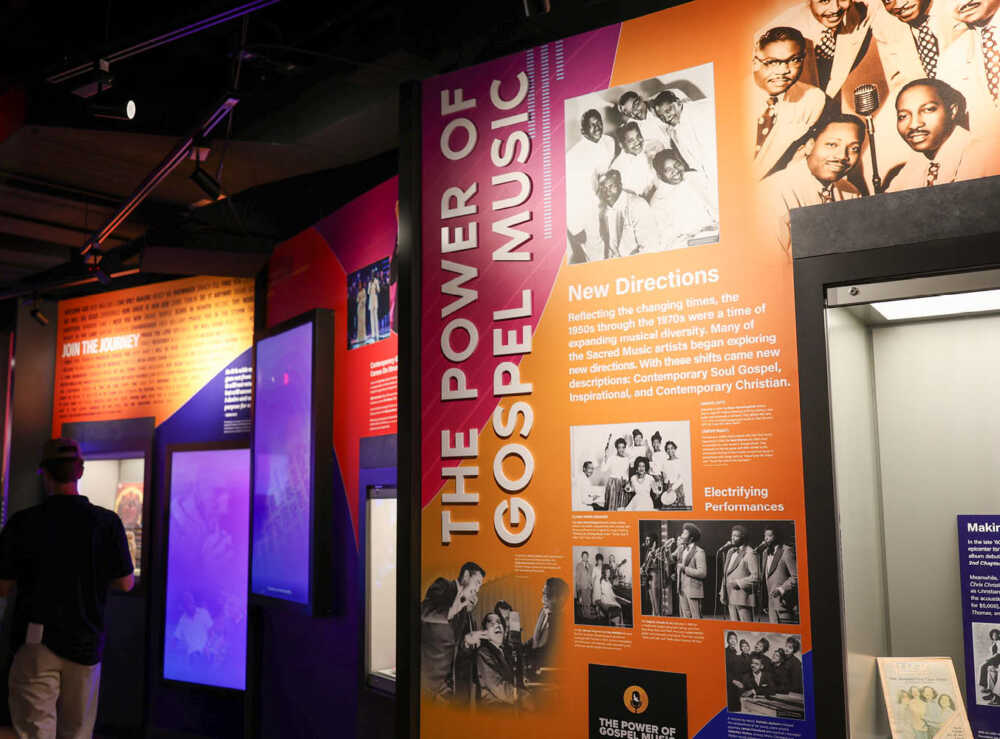
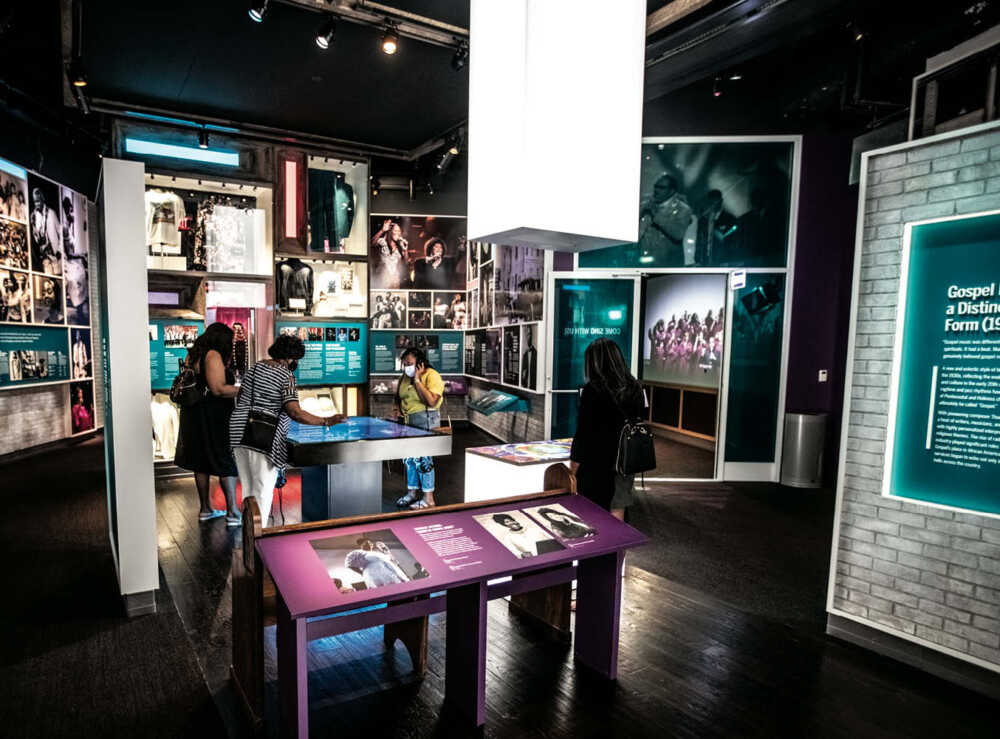
A few steps from Broadway and its lively honkytonks, the Museum of Christian and Gospel Music sings a different tune with interactive exhibits that demonstrate the essential part faith-based music plays in American life, especially as an instrument of unity and hope. This was true during the turbulent years of the Civil Rights Movement, when protestors and leaders found strength in song — they sang as they marched, as they were attacked, in jail cells, in the pews of churches that championed their work. As museum executive director Steve Gilreath said, “Music fueled the protestors, defined the moral structure of the effort and gave a national voice to the struggle.” The museum explores religious music in its many forms, through engaging exhibits about famous family bands and ministers who became musicians and musicians who’ve stepped into the pulpit. African American singers, composers and choir directors are profiled.
In a testimonial booth, visitors can describe how a religious song affected their lives.
Jefferson Street Sound Museum
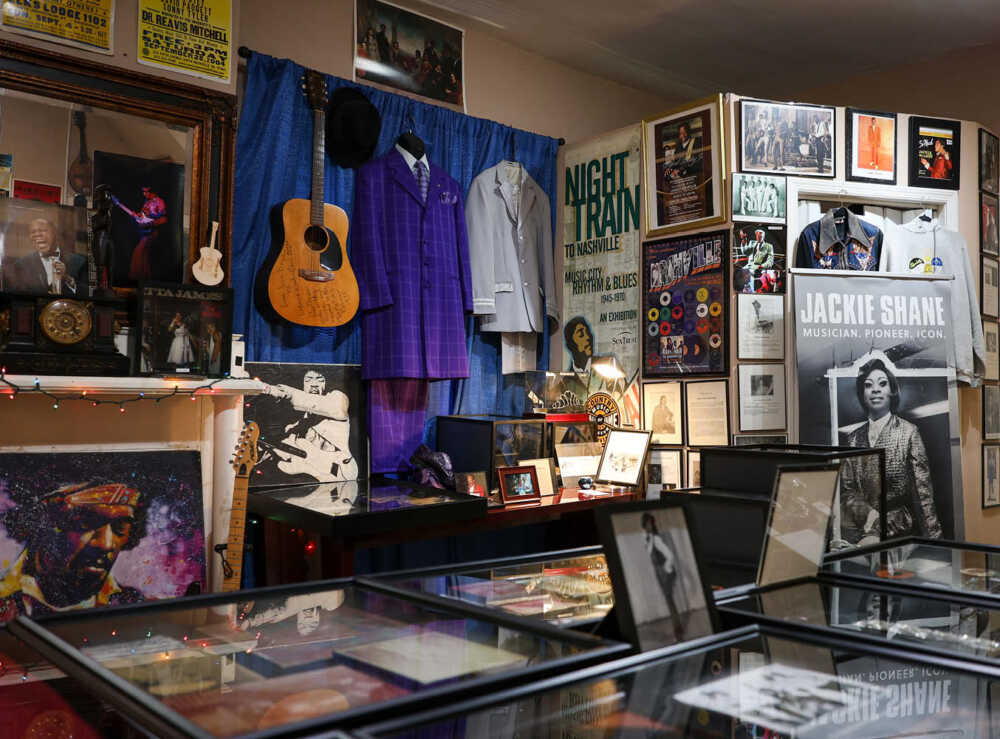
A bright mural of musical legends Jimi Hendrix and Billy Cox welcomes visitors to the vibrant Jefferson Street Sound Museum, a longtime favorite recently added to the U.S. Civil Rights Trail. Founder Lorenzo Washington, who often leads tours, realized years ago that the history of the Jefferson Street he remembers must be preserved and shared. From 1935-65, Jefferson Street was not only Black Nashville’s center of commerce but a nationally known hotbed of blues music. The museum is intimate, and its memorabilia is abundant, stretching to the ceiling. As engaging as the old photos, costumes, guitars and other pieces are, Washington’s story adds the real flavor. It’s easy to imagine the days — before Nashville decided to route I-40 right through the thriving neighborhood, scattering its longtime residents and shuttering its many businesses — when the streets were lined with every business a community needs and music poured from pool halls, bars, supper clubs and fancier venues like Del Morocco and Club Baron. The list of those who played along Jefferson Street includes many of the greatest blues singers of all time, like Jimi Hendrix, Count Basie, Ray Charles, Ike & Tina Turner, Otis Redding, Etta James and Little Richard. Be sure to call ahead to schedule a tour.
National Museum of African American Music
See how African American music traditions changed as America changed, understand how jazz evolved and dig deep into the blues from its early days, when the enslaved sang in the fields, to its widening popularity after World War II at the National Museum of African American Music. Enjoy all the hands-on activities at this museum, where visitors can curate their own playlist to take home, give improv a shot, cut a demo record, groove to disco and sing “Oh Happy Day” with the National Super Choir. Learn about African cultures and slavery in the Roots Theater and follow an interactive timeline of African American music. Opened five years ago, NMAAM is the only museum dedicated to teaching about and preserving music created by African Americans.
Nashville Quick Stops
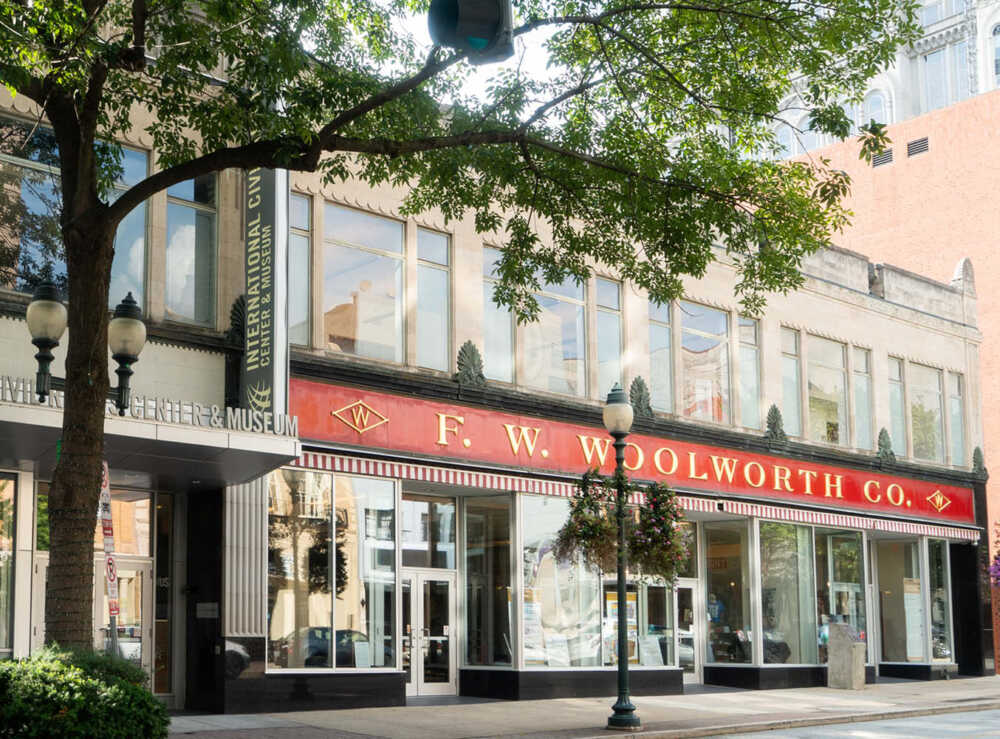
Woolworth on Fifth
The historic marker in front of the old Woolworth’s department store tells the story of 81 brave students from nearby historically black colleges, who organized sit-ins at lunch counters, movie theaters and other public spaces in 1960. The students, not the resisters, were arrested and served jail time. Today, the old Woolworth’s is a theater, home to a supper club and Shiners, an adults-only comedy and cirque show.
Clark Memorial United Methodist Church
Clark Memorial has done important work throughout its long history, especially during the Civil Rights era. Learn about the church’s impact on the development of Nashville’s Historically Black Colleges and Universities (HBCUs) and how it trained civil rights workers to effectively use nonviolent means of protest. The church isn’t open for tours, but it welcomes all to its 10 a.m. Sunday worship, which is sometimes followed by a lunch.

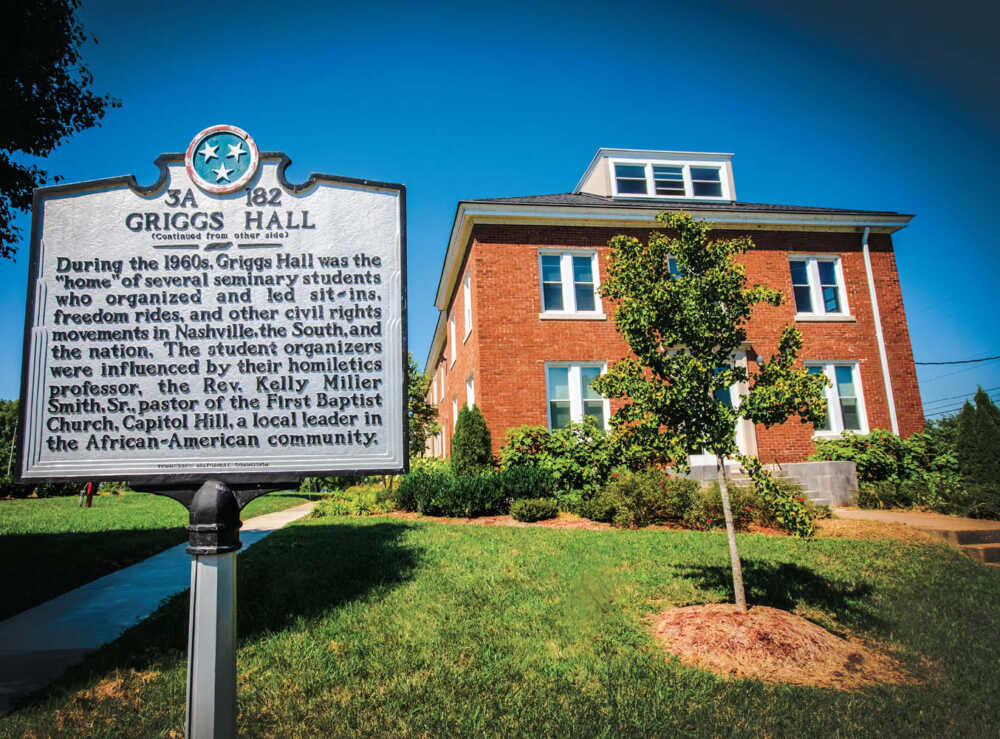
Griggs Hall at American Baptist College
At American Baptist College, tour the restored Griggs Hall, which in 1923 became the first building on this HBCU’s campus. The school has educated important leaders, including Civil Rights activists John Lewis, Dr. Julius Scruggs, and Dr. Bernard Lafayette. Tours can be scheduled online.
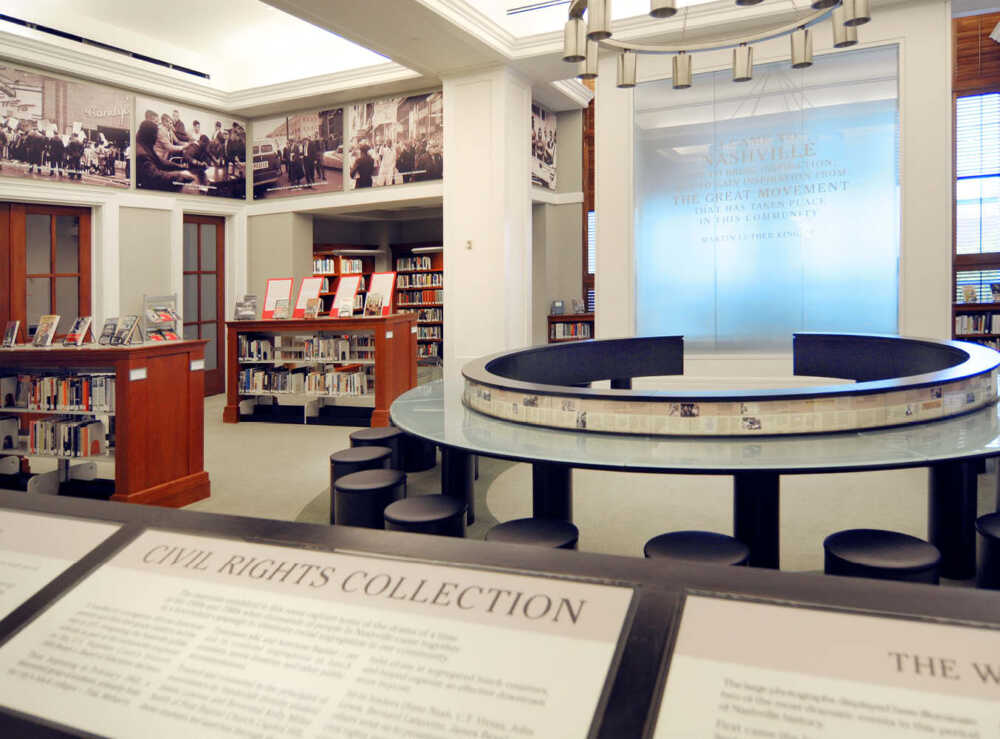
The Civil Rights Room-Nashville Public Library
In this repository of local Civil Rights history, sit at a symbolic lunch counter surrounded by striking black and white photos that document Nashville’s campaign to end segregation in schools and public places. Read the 10 Rules of Conduct that guided peaceful protesters. Call ahead to schedule a guided experience or take a self-guided tour.
Pit Stops
Two nearby distilleries, Corsair and Nelson’s Green Briar, offer tastes, tours and food. Slim & Husky’s is a neighborhood favorite.
Memphis
Music and the smells of barbecue waft through this Mississippi River town, which proudly shares the story of its African American citizens’ long and difficult struggle to achieve equal rights.

National Civil Rights Museum at the Lorraine Motel
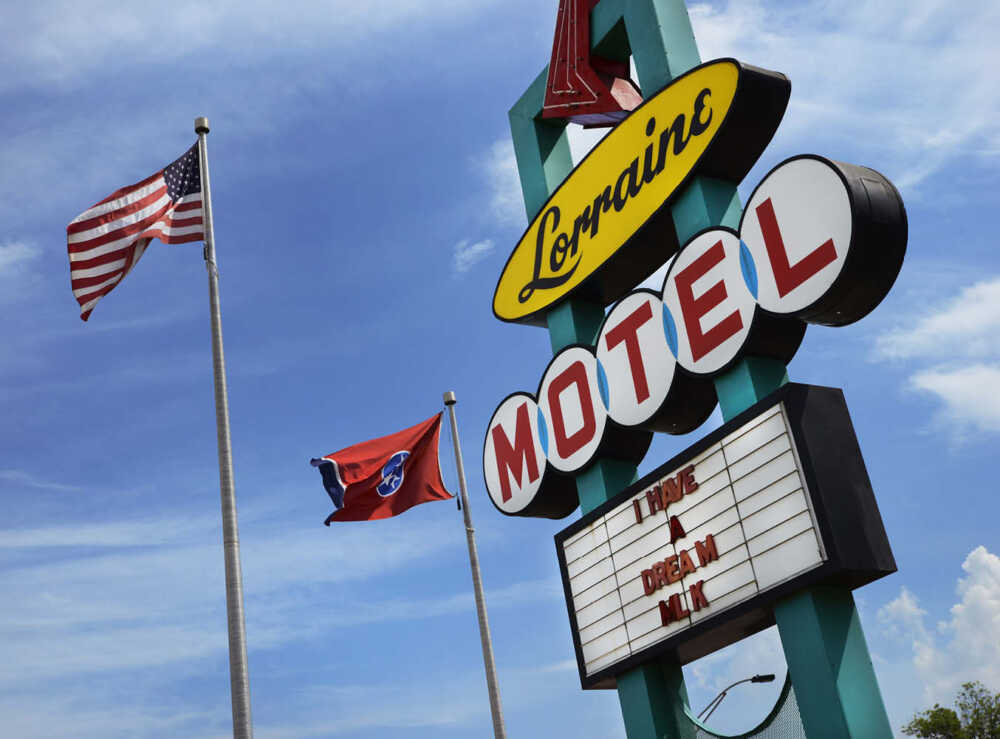
The National Civil Rights Museum at the Lorraine Motel is one of the most powerful stops on the U. S. Civil Rights Trail because it incorporates the motel where Dr. Martin Luther King was assassinated and the building from which the fatal shot was fired. A recently completed expansion to mark the museum’s 35th anniversary has made its Legacy Experience even more relevant by expanding the Civil Rights story from the King assassination to the present. Five immersive galleries explore poverty, education, housing, gender equity and nonviolence. Also new is Founders Park, a contemplative green space between the motel and the Legacy Experience. A terrace in the park looks directly toward the motel balcony where King was standing when he was killed on April 4, 1968.
Stax Museum of American Soul Music
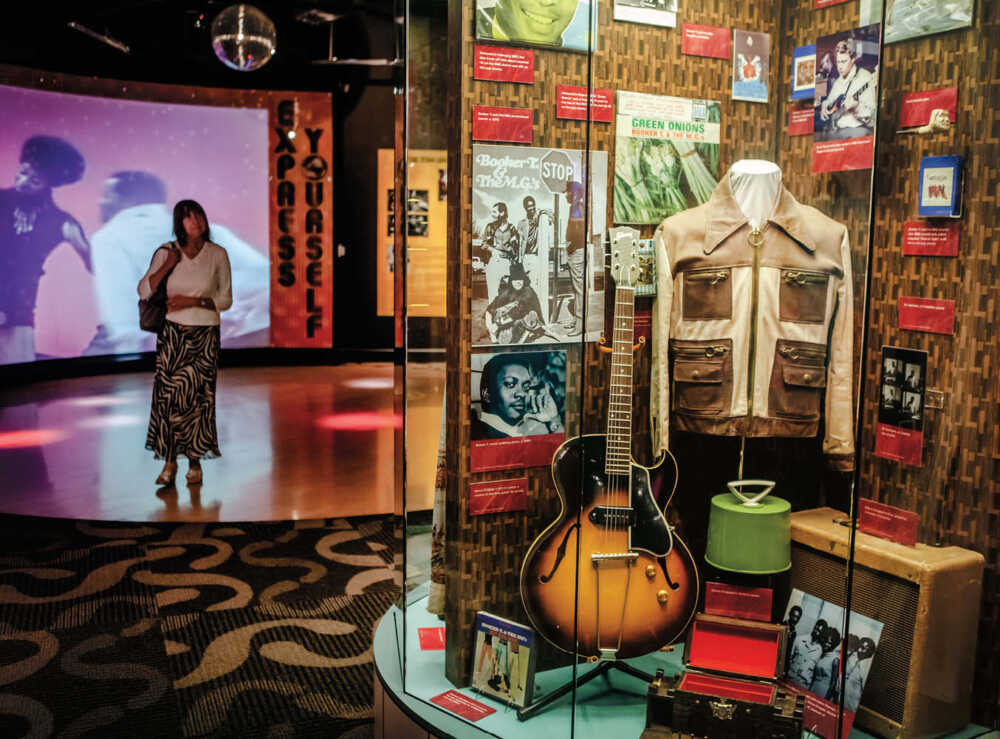
Like the hits Stax Records recorded, the Stax Museum of American Soul Music tells many stories: the rise of soul music, the brother-sister enterprise that sent Stax hits spinning and the discovery of Otis Redding and other music legends. Built on the site of the fabled record studio, the museum is as energetic as the music it preserves and protects, and it encourages visitors to dance along as they mimic Soul Train dancers on screens. The Stax story also reminds visitors that not every business in the South was segregated, showing how Black and white people worked collaboratively to create music Americans love and know by heart. On tours, visitors also learn about ways the museum’s foundation supports the surrounding Soulsville neighborhood.
Beale Street Historic District
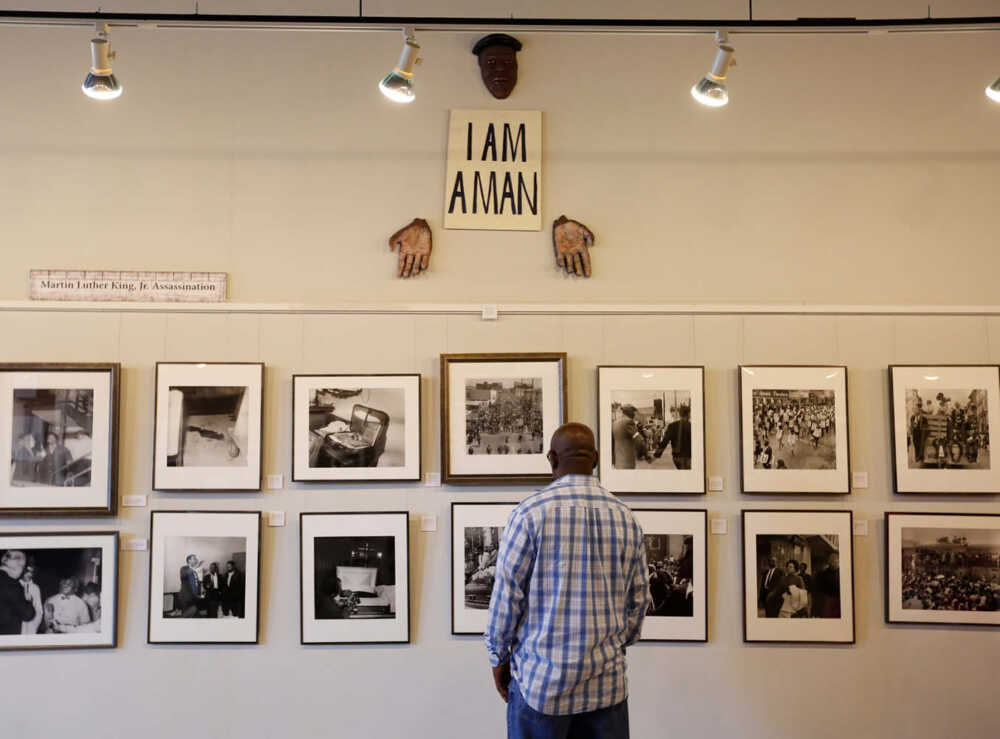
Dedicate part of an afternoon to Memphis’s best-known avenue, lined with restaurants, bars and businesses, and embedded with Civil Rights significance. It was on Beale Street Ida B. Wells set up her anti-segregationist newspaper, and in the early to mid-1900s, black-owned businesses opened and flourished. The historic district and the Withers Museum Collection and Gallery are on the U.S. Civil Rights Trail. The museum is a storehouse of black-and-white images shot by Dr. Ernest C. Withers, a Memphian photographer whose long career paralleled the Civil Rights Movement. Among the important events he and his camera captured were the sanitation workers’ strike, Dr. Martin Luther King Jr.’s last days in Memphis and the trial of the white men who murdered Emmett Till. Withers is also noted for capturing everyday life of Memphis’ Black citizens; the Negro League and future baseball stars Jackie Robinson and Willie Mays and musicians who put Memphis on the map like Aretha Franklin, B.B. King and Isaac Hayes. Hop online or call to schedule a docent-led tour.
Memphis Quick Stops
Historic Clayborn Temple and I AM A MAN Plaza
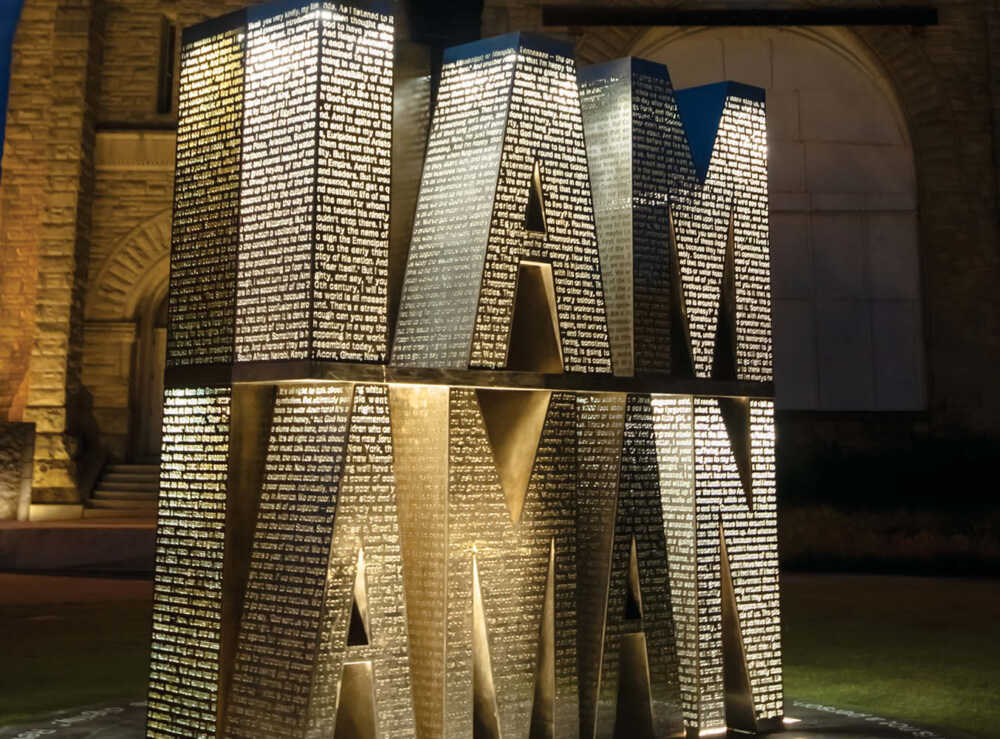
In April 2025, arsonists set fire to Historic Clayborn Temple, the former A.M.E. church that was headquarters for the Memphis Sanitation Workers Strike in 1968. Clayborn Temple is regarded as a sacred place in Memphis because of its role during the strike. Twice each day, more than 1,000 workers gathered there and marched to city hall, holding I AM A MAN signs. At night, they and their families gathered at the church for inspirational talks. Plans call for the church, when restored, to become a place to celebrate culture, be creative and discuss community issues.
The I AM A MAN Plaza, next to the church, is a moving reminder of the courage demonstrated by Memphis sanitation workers and Dr. Martin Luther King, who came to Memphis to march with workers. The night before he was assassinated, he gave his “I Have Been to the Mountaintop” speech, parts of which are inscribed in the stainless steel and bronze I AM A MAN sculpture. As visitors look at the sculpture, they are reflected in it, which the designer hoped would cause them to examine their own attitudes toward race. Names of the 1,300 sanitation workers who marched are engraved on a memorial wall.
WDIA, America’s First Black Radio Station
Millions of African Americans tuned into WDIA for news about the Civil Rights Movement. Founded in 1947, it was the first radio station in the country to devote itself to an African American audience and gave musical legends B.B. King and many others their start. On Union Street, a historic marker and the original WDIA neon sign mark the station’s original location.

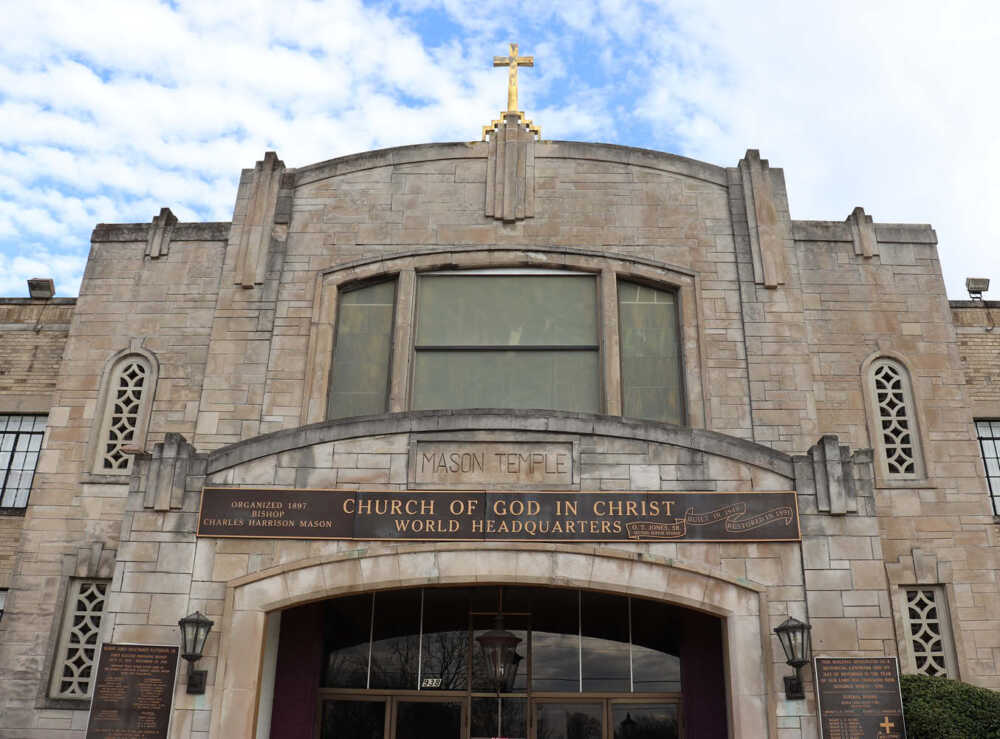
Mason Temple Church of God in Christ
On the night of April 3, 1968, Dr. Martin Luther King Jr. stood before a packed audience in the pulpit of the enormous sanctuary at Mason Temple Church of God in Christ and delivered a powerful sermon that would be his last. The church remains an active congregation; although it doesn’t offer regular tours, depending on the church schedule, groups might get a chance to see the sanctuary.
Pit Stops
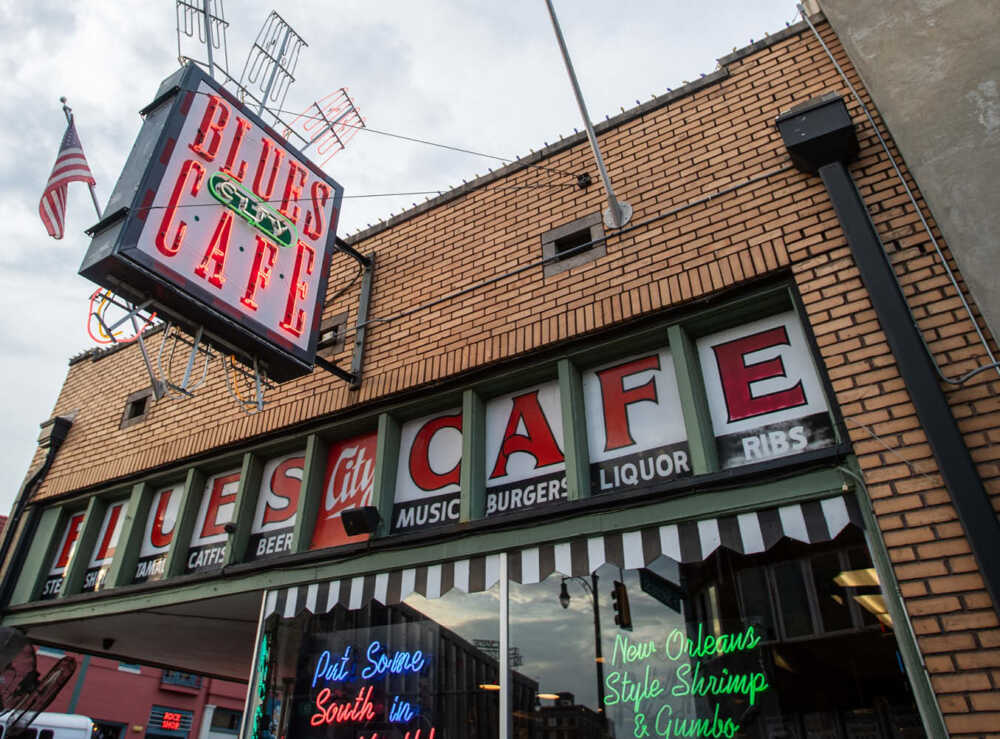
Duck into Blues City Cafe for ribs, fried catfish, steaks and tamales, and then dance off the meal to live music next door at Blues City’s juke joint.
Check out dining tips for tour planners on the Memphis Travel website, including links to restaurants that handle groups. Some are famous, like B. B. King’s and Central BBQ, others are lesser known but equally delectable. The website also has pages dedicated to exploring the city’s Black history and culture.
Clinton
Head east and learn about Clinton, where citizens’ fierce determination and fortitude brought an end to segregation in its schools in 1956.

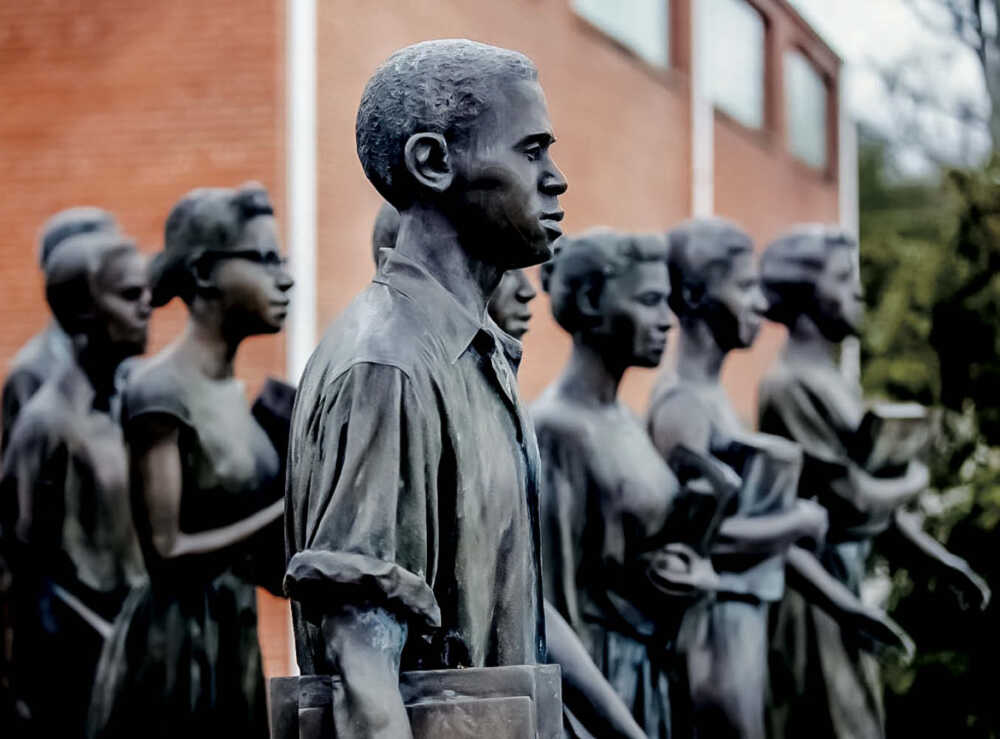
To ensure this story will not be forgotten, Clinton created the Green McAdoo Cultural Center, to honor the Clinton 12, the dozen black students who desegregated Clinton High School, and to recount the two years of violence incited by white segregationists from elsewhere that followed. Civic, church and school leaders—white and black– were threatened, crosses were burned and the school was bombed, but the community built it back. At the cultural center, which was previously an African American school, visitors learn in a 1950s-era classroom about equal rights, desegregation and other social justice issues. In front of the center, bronze statues of the Clinton 12 stand tall. Admission is always free, and tour groups are asked to call ahead to schedule a visit.
Knoxville

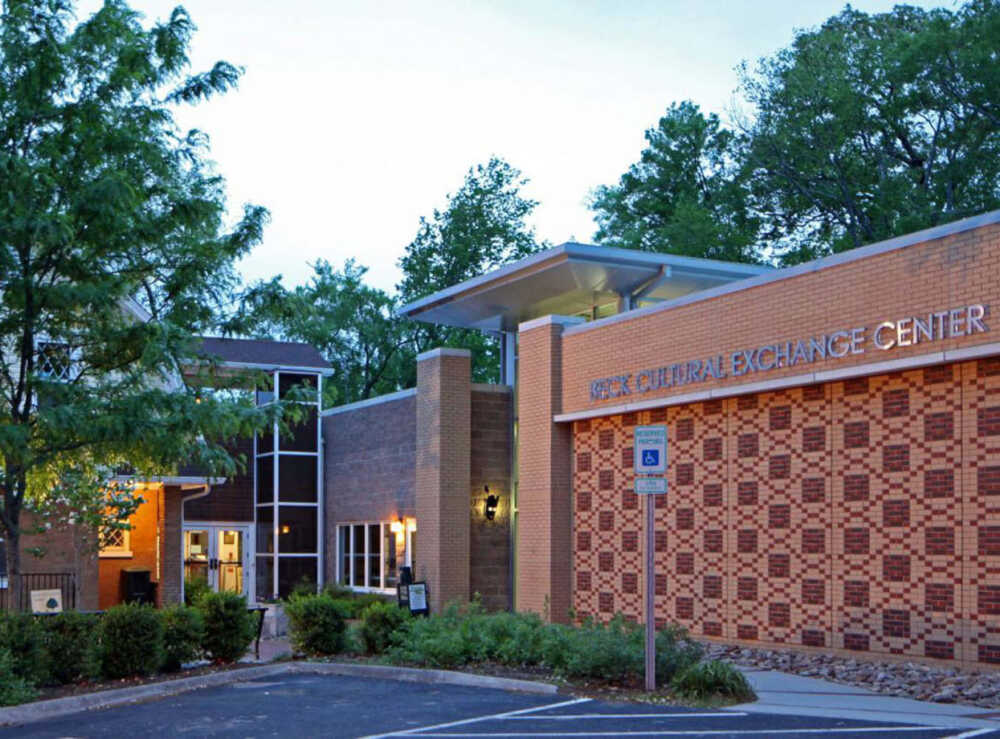
In Knoxville, 30 minutes south, visit the Beck Cultural Exchange Center, known for its collection of the Black history of East Tennessee. Other stops in a town rich in Black history include Alex Haley Heritage Square, a memorial to the author of Roots, who lived on a farm near Clinton late in life. Learn more about Haley and other authors on Literary Knox’s self-guided tour. For more information on other Black history attractions, check out Visit Knoxville.