


Historic Vessels: Destinies on Deck
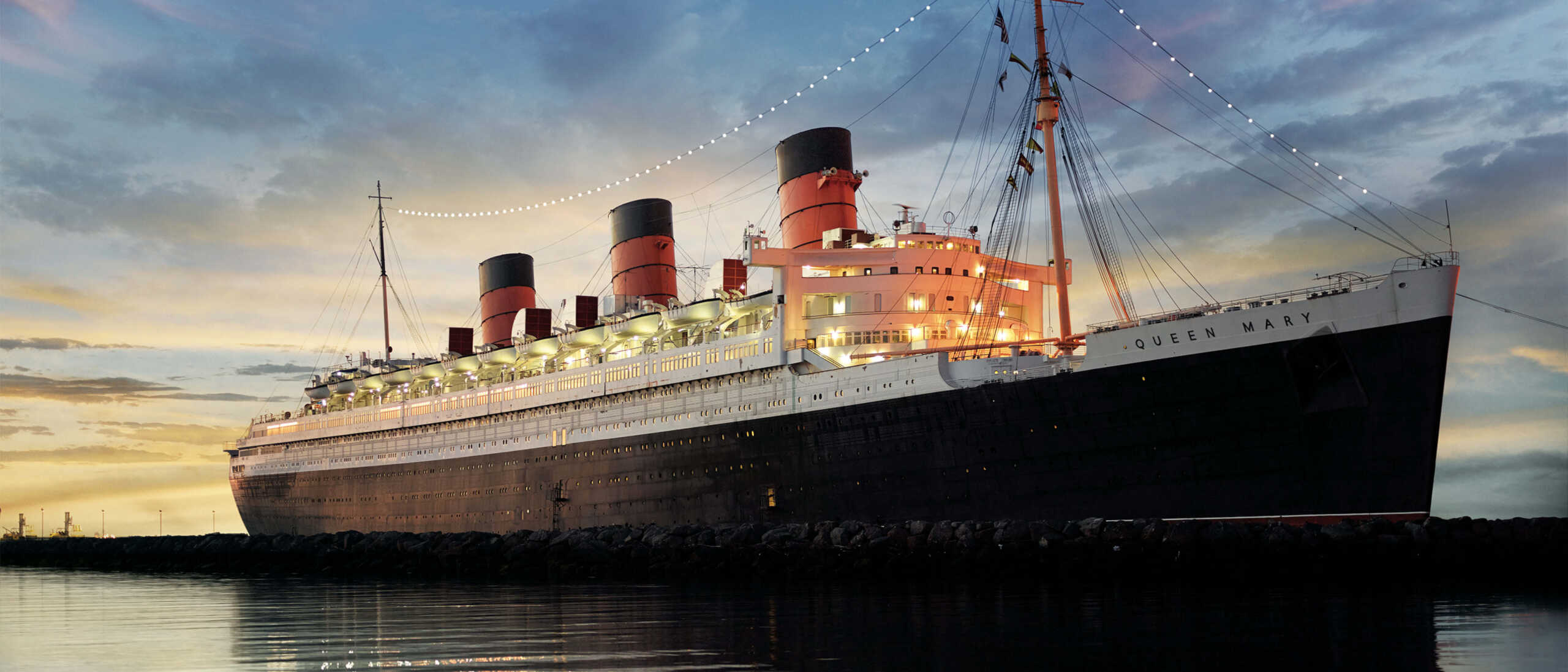
Courtesy The Queen Mary
The vessels that sail across vast seas — or navigate their silent depths — have always been a well for the imagination.

But no imagination is needed to tell the famous stories of vessels like the ship the pilgrims used to cross the Atlantic or the submarine that avenged Pearl Harbor. These ships and submarines have been the stage of major historical happenings for centuries, and many of the mightiest are now docked in vibrant port cities, waiting to be explored. Visitors can learn about the legacies of these historic vessels with guided tours and onboard experiences that give groups behind-the-scenes access. Here are six historic vessels from coast to coast where groups can get their sea legs.
Battleship North Carolina
Wilmington, North Carolina
In 1937, four years before the U.S. officially entered World War II, construction began on Battleship North Carolina. It was the first battleship built in 16 years and one of 10 fast battleships of its class. In 1941, after the attack on Pearl Harbor, it was commissioned and began its trip to the Pacific. It became the most decorated battleship of WWII, participating in every naval offensive of the war and earning 15 battle stars. After the war, it was decommissioned and destined for the scrapyard until a “save our ship” initiative in Wilmington, North Carolina, brought the ship back to its namesake state in 1967.
Today, it’s moored on the Cape Fear River, just across from Wilmington’s historic downtown district. Groups visiting this laid-back community can tour the 35,000-ton vessel to learn about its significance in the global conflict. They’ll see the quarters where the crew lived and worked and learn about its combat capabilities on nine levels of the ship. They can opt for self-guided or guided tours or arrange for an educational program that gives a more in-depth look at the ship’s history. Bus parking is available on-site, and groups can enjoy lunch in Battleship Park next door.
The Queen Mary
Long Beach, California
Celebrating its 90th anniversary in 2026, The Queen Mary was initially constructed in Scotland as a luxury ocean liner, giving passage to celebrities like Queen Elizabeth II, Elizabeth Taylor, Bob Hope, Winston Churchill and Audrey Hepburn. During wartime, it was converted to a troopship that would transfer as many as 800,000 Allied soldiers. Stripped of its luxurious furnishings, it was painted gray for stealth and became known as the “Grey Ghost.”
Though it’s currently docked in Long Beach, California, The Queen Mary’s days of grandeur are far from over. Today, it’s a well-known hotel, restaurant and attraction, bringing in history buffs, leisure travelers and even ghost hunters. The vessel is rumored to be haunted, frequently earning a designation as one of the most haunted places in North America. Groups can take guided history or paranormal tours or opt for a three-hour VIP tour, complete with lunch on board. Brave groups can even spend the night aboard the ship. Tours are limited to about 30 participants.
Mayflower II
Plymouth, Massachusetts
The story of the pilgrims’ journey to the New World is well known; in 1620, 102 English passengers departed on a 66-day voyage across 3,000 miles of ocean. On their journey, they faced storms, sickness and the birth of a baby (aptly named Oceanus) before landing in Cape Cod. In the 400 years since the Mayflower sailed, the wooden merchant ship has been recognized as an integral part of the story. Plimoth Patuxet Museums in Plymouth, Massachusetts, continues to tell that story by offering visitors access to a replica ship known as Mayflower II, which was constructed in England in 1957 and came to Plymouth in a similar fashion as its namesake vessel, navigating storms and all. In 2020, the Mayflower II was added to the National Register of Historic Places.
When groups visit the Plimoth Patuxet Museums, they can board the ship where it’s docked in Plymouth Harbor. They’ll learn about the perils the pilgrims faced and hear the story of the modern ship’s construction.

The Mather
Cleveland
The Great Lakes comprise the largest freshwater system on the planet. Countless people have navigated the Great Lakes by boat, from the Indigenous people of North America to European settlers and merchants sailing massive cargo ships. The Great Lakes Science Center in Cleveland, on the shores of Lake Erie, has preserved one such vessel, the Steamship William G. Mather, also known simply as “The Mather.” Nicknamed “The Ship That Built Cleveland,” this 1925 steamship took round trips to Duluth, Minnesota, to bring raw materials for steel production. The cargo ship doubled as a passenger ship; it was also the first Great Lakes vessel to have radar. Restoration work on the historic ship began in 1987, and it was donated to the Great Lakes Science Center in 2006.
Guided tours of The Mather are held daily at 12:30 p.m., led by the center’s staff and volunteers. On these tours, guests will learn about shipping along the Great Lakes and tour the ship’s cabin and crew areas to learn about life on board. Special “hard hat” tours let groups glimpse areas of the ship usually off-limits to the public, like the engineer’s catwalk and the propeller shaft.

USS Battleship Missouri Memorial
Honolulu
On September 2, 1945, World War II came to a formal end on board the USS Missouri in Tokyo Bay as the U.S. accepted Japan’s surrender. The massive Iowa-class battleship was built in 1944 and participated in several battles in the Pacific in early 1945. “Mighty Mo” was again commissioned during the Korean War and again in the Gulf War in the 1980s and ’90s. It was finally decommissioned in 1992, ending an impressive career. In 1998, it became a museum ship where it was docked in Pearl Harbor, and it also serves as a memorial.
Groups can take guided tours of the battleship to see a range of World War II exhibits, detailing topics such as kamikaze pilots, the Japanese surrender and the USS Arizona, which sank during the Pearl Harbor attacks of 1941. Upgraded tours are also available and offer a more in-depth look at things like crew life and leadership during wartime or the ship’s mechanical operations.
Galveston Naval Museum
Galveston, Texas
Home to two World War II vessels, the Galveston Naval Museum in Galveston, Texas, packs a punch for history buffs. Groups will find the park on Pelican Island, not far from other area attractions like Moody Gardens or the city’s beaches. At the museum, groups will find two WWII-era vessels, both commissioned in 1943. The USS Cavalla is an attack submarine that sank one of the Japanese vessels that attacked Pearl Harbor, earning it the nickname “Avenger of Pearl Harbor.” The USS Stewart is a Destroyer Escort ship, designed to defend slower or more important ships from attacks from above or below. The USS Stewart, brought to Galveston in 1974, is one of just two left in the world. The USS Cavalla, though briefly decommissioned after the war, was brought out of retirement to serve as a training vessel during the Cold War. It was decommissioned in 1969 and transferred to Seawolf Park in Galveston in 1971.
The museum offers special rates for groups over nine and can provide tour guides for groups smaller than 45. Guided tours take groups through the vessels and allow visitors to look at other artifacts on the grounds, such as the conning tower of the USS Carp and the sail of the USS Tautog. Exhibits cover topics ranging from women’s contributions during WWII to the artillery used on naval missions. For an extra VIP experience, groups can host sleepovers aboard the vessels and sleep in the bunks where the crew slept.


Rachel Crick
Rachel Crick is the associate editor and project manager for The Group Travel Leader Inc. When she's not writing articles amidst her many plants, Rachel enjoys gardening, photography, and spending time with her family and cats, Misty and Jazz.
You May Also Like



About Us

We're The Group Travel Leader, America's leading experts on all things group travel. Find hundreds of articles, podcasts and other free resources for your group travel program here.
The Latest Issue

Stay Connected!
Get the Group Travel Minute e-newsletter twice a month.