


Route 66 is Cooler Than Ever
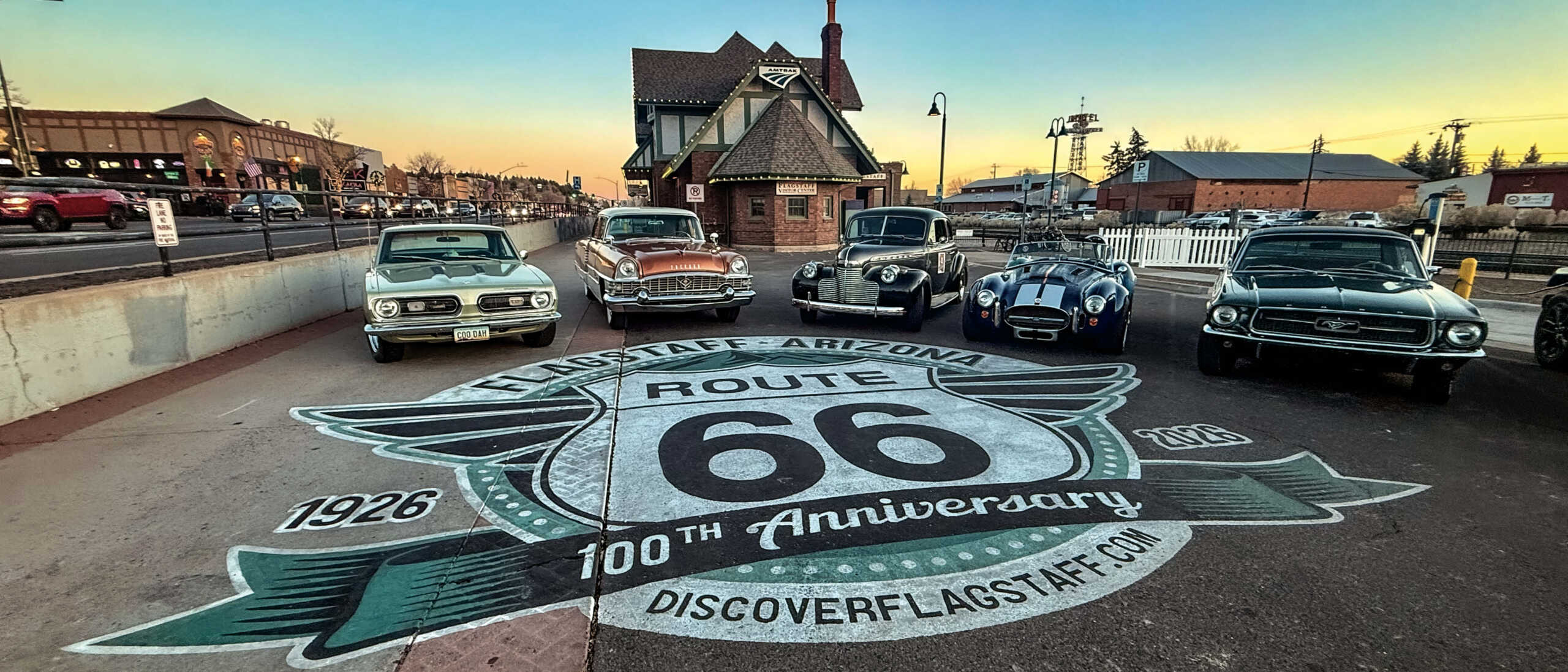
Courtesy Discover Flagstaff
As Route 66 celebrates 100 years of history in 2026, it’s clear The Mother Road’s legacy sweeps wider than any winding asphalt footprint. The iconic route has become a metaphor for Americana, for road tripping in its purest form and for the unbridled mystique of the American West.

A journey along Route 66 is not just a drive. It’s a chance to explore a colorful mix of cities and towns that have, over the decades, each made their mark on the American experience, in ways both big and small.
Of course, there’s no right or wrong list when it comes to Route 66 destinations. But the five stops below will give groups a solid footing to build from as they chart their own Mother Road itinerary.
When travelers do hit the road, they should stop often in towns they’ve heard of and in ones they haven’t. Doing so means groups will come away with memories of both landmark destinations and unexpected surprises — the best of what Route 66 has to offer.
Chicago
There’s no better place to start a Route 66 westward journey than in Chicago, the storied highway’s official starting point. In early 2026 — to celebrate The Mother Road’s centennial — the symbolic start of the route moved from its former location on Michigan Avenue to Chicago’s Navy Pier.
Chicago city officials and members of the Route 66 Centennial Commission made the shift to create a “pier-to-pier” connection with the famed “End of the Trail” sign at Santa Monica Pier. Now, travelers can kick off their journey with a photo shoot at the newly installed “The Road Starts Here” sign on the Windy City’s own pier.
Once they have their Route 66 kickoff snapshot in hand, groups can take some time to explore all that Chicago has to offer, from world-class art at The Art Institute of Chicago to gravity-defying views at the Willis Tower Skydeck and famed deep-dish pizza at the likes of Giordano’s or Lou Malnati’s.
Groups can plan a stop at Millennium Park for a must-have photo in front of the Cloud Gate sculpture, aka “The Bean,” and schedule a boat tour along the Chicago River to learn about the history of the architectural gems that dot the city’s skyline.
Shopping-savvy travelers can spend an entire day exploring the boutiques along Michigan Avenue. Meanwhile, animal lovers should head to Shedd Aquarium for views of Pacific white-sided dolphins, sea otters, sea lions and more. For science buffs, the city’s Field Museum offers some of the world’s top paleontology exhibits, including the famed T. rex skeleton dubbed “Sue.” Route 66 travelers can cap off their visit with a Chicago-style hot dog at a Cubs or White Sox game or enjoy a night of culture, compliments of the renowned Chicago Symphony Orchestra or Joffrey Ballet.
Joplin, Missouri
Once a center for lead and zinc mining and later the site of a famous Bonnie and Clyde hideout, the city of Joplin, Missouri, today boasts plenty of ways to, in the words of the famed song, “get your kicks on Route 66.”
“There’s a reason this city was included in that song,” said Kerstin Landwer, assistant director and director of sales for Visit Joplin, MO. “Joplin is iconic for its mining history, outlaw legends and fantastic Route 66 art — including our World 3D Street Painting Festival galleries. Plus, we pride ourselves on offering affordable dining and lodging and outstanding visitor service.”
In June, to celebrate the Route 66 centennial, Joplin will host one of its largest-ever World 3D Street Printing Festivals. The event will attempt to create the world’s largest collection of 3D street paintings, with a goal of keeping the artwork on display through 2027.
While in the area, groups can make time for a stop at Grand Falls, the largest continually running waterfall in Missouri, or spend an entire afternoon meandering the trails and exploring the nature exhibits at the city’s Shoal Creek Conservation Education Center. The Joplin History & Mineral Museum features exhibits on Bonnie and Clyde, plus an expansive mineral collection and the National Cookie Cutter Historical Museum Collection, along with displays that explore the region’s mining history.
Before leaving town, visitors can stop by Joplin’s Route 66 Mural Park, at 619 South Main Street, to capitalize on a perfect backdrop for a frame-worthy road trip photo.
Santa Fe, New Mexico
Formally established by Spanish conquistador Don Pedro de Peralta around 1609, Santa Fe, New Mexico, stands today as one of America’s oldest cities. Its Palace of the Governors — an iconic adobe building dating to 1610 in Santa Fe Plaza that now operates as part of the New Mexico History Museum — is the oldest public building in continuous use in the U.S.
The original Route 66 passed through Santa Fe until the highway’s orientation was changed in 1937. Today, the city exists as a side trip from the main route, but it’s worth the effort because the community is awash in art and culture.

Santa Fe’s famed Canyon Road includes more than 100 art galleries, boutiques and restaurants in just one-half mile. Downtown, the Georgia O’Keefe Museum celebrates the life and work of the famed painter, who made New Mexico her home throughout much of her life. A short walk away, the IAIA Museum of Contemporary Native Arts includes contemporary works by Indigenous artisans and informative perspectives on the enduring legacy of local native cultures.
Guided walking tours offer an opportunity to explore the unique adobe architecture that distinguishes the city, including highlights like the San Miguel Chapel, billed as the oldest church in the continental U.S.
Santa Fe is pedestrian friendly, making it easy to stroll and explore. No matter which direction they turn, visitors will likely find themselves drawn to the enticing aromas of locally made New Mexican specialties, like green chile stew or posole with green chile sauce. Groups should leave ample time to explore the city’s unique culinary scene, which makes the destination worth the drive.
“A great way to make the most of a day in Santa Fe is to start with a guided walking tour for a city overview then fuel up with a chile-laden plate of traditional New Mexican food before heading into a museum for the afternoon,” said Joanne Hudson, public relations manager for Tourism Santa Fe.
Flagstaff, Arizona
Nestled within the Coconino National Forest — which includes a mix of desert landscapes, mountainous terrain and one of the world’s largest ponderosa pine forests — Flagstaff, Arizona, is surrounded by natural beauty.
The famed Lowell Observatory, site of the discovery of Pluto in 1930, offers more than 100 exhibits on science and space, plus nighttime stargazing opportunities. The historic site’s new Astronomy Discover Center, opened in 2024, includes an open-air dark sky planetarium and a three-story, 40,000-square-foot science center with displays that explore questions like, “Could there be life on other planets?” and “What does space smell like?”
The area’s three national monuments — Wupatki National Monument, Sunset Crater Volcano National Monument and Walnut Canyon National Monument — provide the opportunity to explore the region’s unique natural landscape as well as protected, ancient Indigenous dwellings.
“At the national monuments just outside the city, visitors can see ancient pueblos, a dormant volcano and cliff dwellings where people lived about 1,000 years ago,” said Ryan Randazzo, media relations and marketing project manager for Discover Flagstaff. “Plus, Grand Canyon National Park is just 90 minutes away, making it possible to see that natural wonder and still make it back in town for a great evening.”
In downtown, Flagstaff’s Orpheum Theater hosts a rich, rotating schedule of nighttime entertainment, from comedians and singers to film festival screenings.
Barstow, California
Known as the “Crossroads of the West” because it sits where Route 66 intersects with Interstate 15 and Interstate 40 in Southern California, Barstow wears its Mother Road heritage with pride.
“The city has marked the Route through Main Street with a series of fun, catchy marquees, each with a different classic car on top,” said Beth Murray, president of the California Historic Route 66 Association.
In town, two vintage, privately-owned motels in business for generations — the Torches Motel and the Route 66 Motel — still welcome road-weary travelers. Overnight guests can also book a stay at a number of hotels and inns of a more modern variety.
The Casa del Desierto, a historic 1911 Harvey House Building on North First Avenue, now houses the Western America Railroad Museum and the Route 66 Mother Road Museum. There, guests can explore railroad artifacts, memorabilia and model trains, as well as classic cars, vintage neon signs and other rare roadside artifacts from across Route 66’s 100 years of history.
The city itself can serve as a convenient base for exploring the western side of Mojave National Preserve, roughly an hour’s drive away. There, groups can explore the famed underground Lava Tube, hike Teutonia Peak Trail and drive scenic Kelbaker Road.

Robin Roenker
Freelance writer Robin Roenker reports on travel, healthcare and higher education for regional and national outlets including Group Travel Leader, AARP, Southern Living, USA TODAY and more. She lives in Lexington, KY, with her husband, three sons, and very energetic dog, Ollie.
You May Also Like




About Us

We're The Group Travel Leader, America's leading experts on all things group travel. Find hundreds of articles, podcasts and other free resources for your group travel program here.
The Latest Issue
Stay Connected!
Get the Group Travel Minute e-newsletter twice a month.