


Legendary Leaders
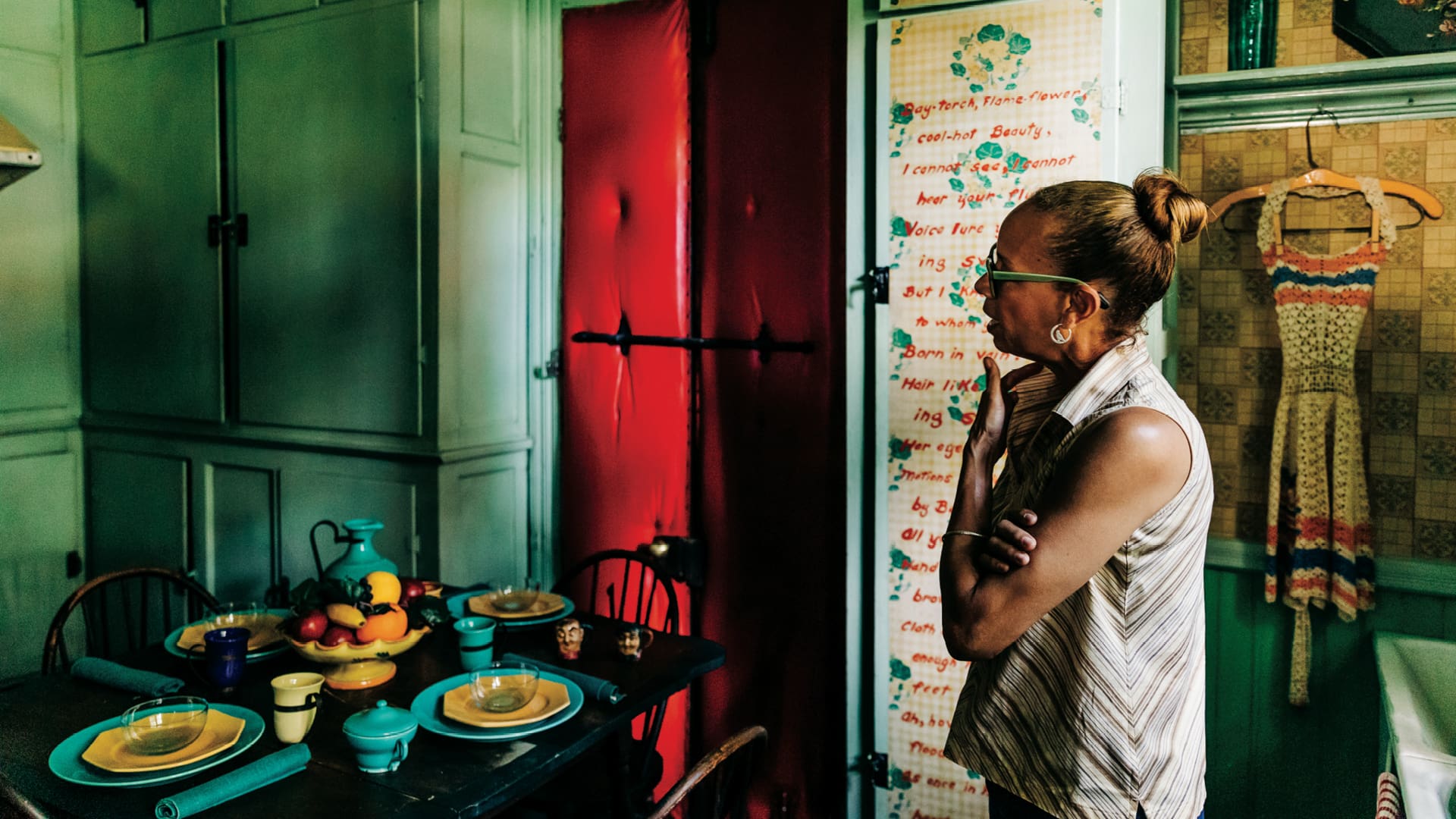
The Anne Spencer House and Gardens Museum tells the story of Harlem Renaissance poet Anne Spencer. Courtesy Lynchburg OEDT
Black voices can be heard throughout history, though they have been silenced too often.

But their stories echo through time, from the abolitionists who rallied against slavery to the men and women who broke barriers in entertainment, sports and music. These Black visionaries are honored and their legacies preserved at homes, businesses, museums and monuments across the country.
Here are five group-friendly sites where visitors can hear the stories of these legendary men and women.
Frederick Douglass National Historic Site
Washington, D.C.
Frederick Douglass was a prominent abolitionist, social reformer, author, preacher and politician in the 19th century. Born into slavery around 1818 in Maryland, he escaped in 1838 and began a long career of activism not only for abolition and Black suffrage, but also for causes like women’s suffrage. He founded the North Star newspaper and published several autobiographies, including “Narrative of the Life of Frederick Douglass, an American Slave,” for which he is perhaps best known. In his later career, he was appointed to several political posts, including U.S. Marshal and minister resident to the Republic of Haiti, marking several firsts for African Americans in the country’s political sphere.
Douglass’ home, which he called Cedar Hill, is still preserved today in Washington, D.C., as a national historic site. The property, where he lived the last 17 years of his life, includes the historic house, 9 acres of the original estate grounds and a visitor center.
Tours begin in the visitor’s center, where groups can watch a 19-minute film about Douglass’ fight for freedom and his activism. Visitors can take ranger-led interpretive tours of the historic home, which contains many of Douglass’ original furnishings, writings and other personal effects. Reservations are required for groups. They can also walk the historic site’s grounds to see the gardens and the “Growlery” — a place where one growls, a term supposedly coined by Charles Dickens and adopted by Douglass. The site’s current Growlery is a reconstruction of the small brick building where Douglass retreated to read and write in seclusion.
B.B. King Museum
Indianola, Mississippi
Known as the “King of Blues,” B.B. King was a blues musician and record producer whose impact on the genre is hard to overstate. Born Riley B. King in 1925, the legendary singer and guitar player was the son of sharecroppers on a Mississippi cotton plantation who got his musical start in a church choir and taught himself to play the guitar. He later performed on several radio programs in West Memphis, Arkansas, and in Memphis, Tennessee, where he gained an audience as well as his nickname, “Blues Boy,” eventually shortened to B.B. A prolific musical career followed; he recorded and toured throughout his life, earning 15 Grammy Awards and inspiring countless musicians who followed him, forever shaping the blues, rock ’n’ roll, R&B and soul genres.
A musical legacy as vast as King’s is difficult to encompass, but the B.B. King Museum in Indianola, which King claimed as his hometown, accomplishes this herculean task with multiple galleries exploring King’s life and career, from his farming roots to the final decade of his life. Exhibits include personal artifacts like his Chevy El Camino and Rolls Royce Silver Shadow, stage outfits and memorabilia, and the restored 1940s cotton gin building where King once worked. The museum also contains a theater and a memorial courtyard, where King was laid to rest in 2015. Here, visitors pay their respects to this musical icon. Groups of 20 or more receive special admission rates. They can reserve a catered tour, which includes museum admission and a catered lunch at nearby Club Ebony, with a live blues performance during the meal.
“You’ll get the chance to just walk through his life all the way through and then get a chance to go into that club and have an authentic Mississippi Delta-style lunch and music on stage,” said Robert Terrell, the museum’s deputy director. “It gives you a full look at the Delta along with the music and the culture.”
Anne Spencer House & Garden Museum
Lynchburg, Virginia
Though she lived much of her life in Virginia, Anne Spencer is widely considered a prominent figure of the Harlem Renaissance Movement, the cultural revolution that came out of Harlem that included figures like Duke Ellington, Langston Hughes and W.E.B. Du Bois. She was born in 1882, and much of her most notable poetry was produced during the 1920s, when the New York-based movement was exploding. While her poetry gained enough prominence to be added to The Norton Anthology of Modern Poetry in 1973 (making her the second African American to achieve this feat), Spencer was also a teacher, activist and librarian who actively sought to improve the lives of African Americans living in Virginia. She also founded the Lynchburg NAACP chapter.

Her home, a charming 1913 Queen Anne-style house in Lynchburg built by her husband, Edward Spencer, is open for tours. Inside the home, groups will see many of Spencer’s original furnishings and personal belongings. The carpentry and interior decorating also offer a distinct look at the Spencers’ lives and accomplishments. Her beloved garden has been restored to its initial grandeur and so has her writing studio, “Edankraal” — named for a combination of Anne and Edward and the Afrikkans word for “corral.” It was in this garden writing studio that she welcomed other influential Black authors and thought leaders like Du Bois and Hughes, as well as Thurgood Marshall, George Washington Carver and Martin Luther King Jr.
Because of the home’s size, group tours are limited to 15 to 20 people, though larger groups can split their time between touring the home and the garden. Groups should contact the museum in advance to reserve their time slots.
Jackie Robinson Museum
New York City
Jackie Robinson broke the color line in Major League Baseball by becoming the first African American player drafted to a major league team. He started as the first basemen for the Brooklyn Dodgers in 1947 and won the Rookie of the Year award that same year. While he suffered racist jeers and taunts, he quickly proved his value to the Dodgers. During his illustrious baseball career, he won many more awards, including the national league’s MVP in 1949. He was also named the league’s All-Star for six years straight and was on the team the year the Brooklyn Dodgers won a World Series Championship in 1955. Robinson even received several posthumous awards, including the Presidential Medal of Freedom.
His record of breaking barriers didn’t stop at sports — he was also the first African American to be named vice president of a major American company with his appointment as vice president of personnel at Chock full o’ Nuts. Robinson also volunteered in his local NAACP chapter, wrote columns for several New York newspapers and co-founded the Freedom National Bank of Harlem.
The Jackie Robinson Museum is dedicated to exploring his legacy, both on and off the diamond. It opened on Varick Street in Manhattan in 2022 after many years of planning. Robinson’s widow, Rachel Robinson, then aged 100, cut the ribbon in an emotional opening ceremony. The museum contains nearly 20,000 square feet of exhibits, including an introductory film and artifacts such as photography, memorabilia, timelines and personal testimonials by individuals touched by Robinson’s life. Groups can take self-guided tours or arrange for a curated, guided tour in advance. Tours run an estimated 30-40 minutes. Groups of up to 35 can arrange a single tour, while groups larger than 35 should stagger their arrivals.
Colonel Allensworth State Historic Park
Earlimart, California
In the early 20th century when Jim Crow segregation laws dominated the Southern U.S., a small town was formed in Southern California that broke barriers. The town of Allensworth was the first and only California town to be founded, financed and governed entirely by African Americans. Colonel Allen Allensworth, for whom the city was named, established the town with other board members to offer Black people a safe place to lead autonomous lives and pursue education, financial stability and a rich community life. Allensworth, a significant figure in his own right, was born into slavery in Kentucky in 1842 and joined the Union Army to fight for his freedom. He was the leader of the Buffalo Soldiers, Black regiments of soldiers who served on the Western frontier. Allensworth was also the first African American to earn the rank of Lieutenant Colonel in the U.S. Army.
Today, the park preserves parts of the historic town as they appeared between 1908 and 1918, with many replicas of historic buildings and some original buildings. Groups can arrange guided tours of the park in advance, or they can participate in self-guided or digital tours of the site. If they visit on event days that commemorate occasions like the park’s rededication and Juneteenth, they’ll find historical reenactors, arts and crafts, dancing, and more festivities.
“This is the first park that was specifically dedicated to telling the story of the state’s African American pioneers, such as the Buffalo soldiers and the other founders of the town,” said Dorian Yarnelson, historical interpreter at California State Parks. “The people that come here are interested in the history and want to experience it for themselves and walk in the footsteps of the pioneers.”

Rachel Crick
Rachel Crick is the associate editor and project manager for The Group Travel Leader Inc. When she's not writing articles amidst her many plants, Rachel enjoys gardening, photography, and spending time with her family and cats, Misty and Jazz.
You May Also Like
About Us

We're The Group Travel Leader, America's leading experts on all things group travel. Find hundreds of articles, podcasts and other free resources for your group travel program here.
The Latest Issue
Stay Connected!
Get the Group Travel Minute e-newsletter twice a month.