


Louisiana’s Pivotal Role in the Civil Rights Movement
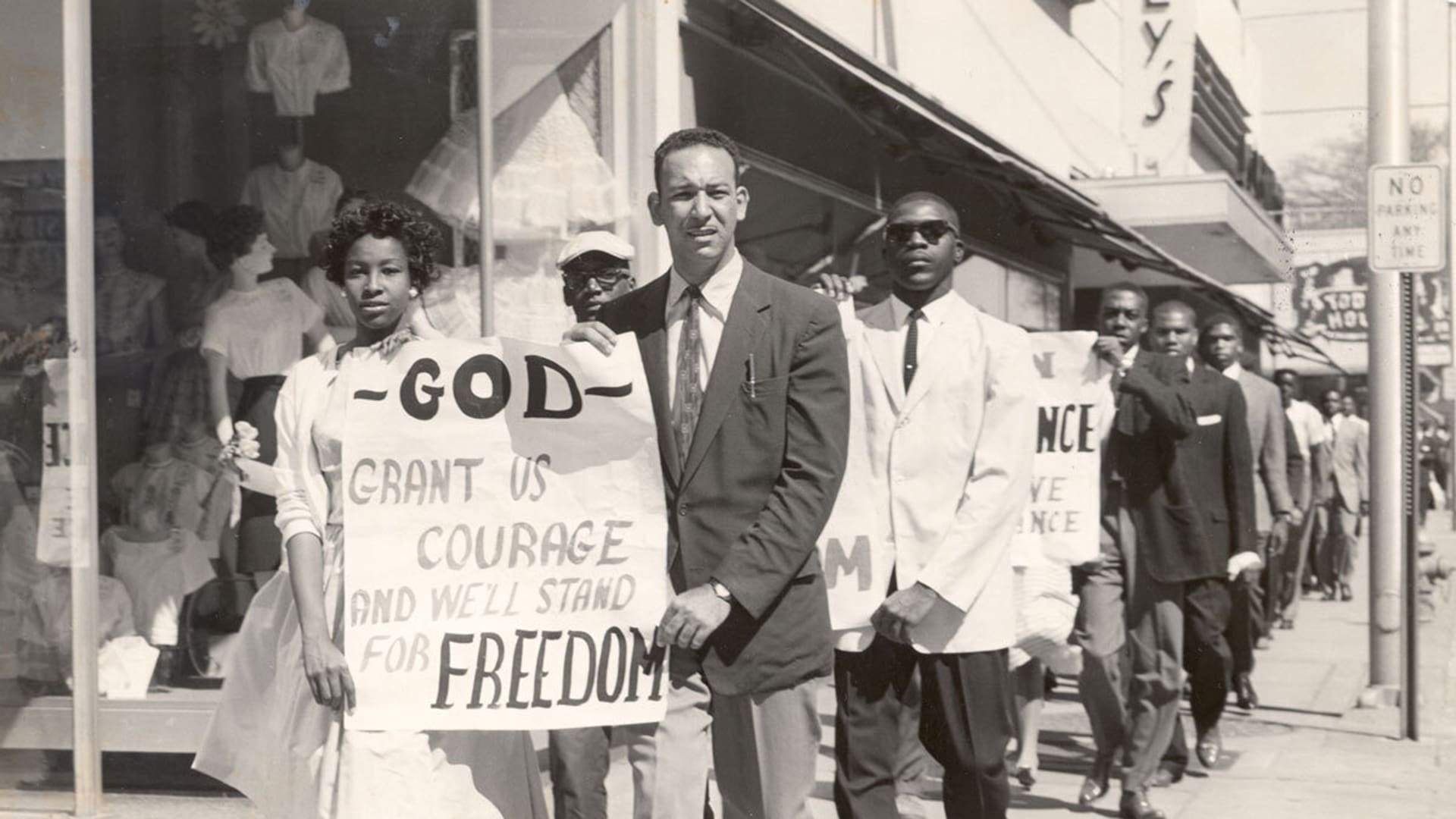
The U.S. Court of Appeals in New Orleans, all photos courtesy Louisiana Office of Tourism
Sponsored Content
Louisiana played a significant role in the advancement of U.S. Civil Rights. Louisiana was home of many firsts in the U.S. Civil Rights Movement. It was the first state to organize a large-scale boycott of a city’s segregated bus system. It was the first state to integrate an entire public school system. It was first to organize an armed veteran-led coalition to protect civil rights workers and neighborhood families. And during the pre-WWII military maneuvers, it was one of the first states to form a Black Army battalion, which became known as “Patton’s Panthers,” ultimately contributed to the desegregation of the entire U.S. military. Louisiana had the longest march in U.S. history.
Louisiana can claim many firsts in the Civil Rights Movement, and travelers can visit many of the state’s sites on the U.S. Civil Rights Trail to learn about Louisiana’s pivotal role in this national effort.
The First Bus Boycott
Louisiana was home to the first large-scale boycott of a city’s segregated bus system — a boycott that was so successful, it inspired Civil Rights leaders and influenced future bus boycotts. The historic Baton Rouge Bus Boycott began on June 14, 1953, when Martha White, a housekeeper, refused to give up her seat in the white section of a city bus, sparking the protest. Black residents wanted fair treatment by the local bus system, which forced them to stand in the back of buses, even when seats were open in the whites-only section and even though Black riders comprised 80% of city bus ridership.
About 125 private cars were used to drive people while the boycott was in effect, and riders gathered at the Old State Capitol to find free transportation to work. A local Black-owned gas station provided fuel at cost to support the protest. Though it was only eight days (and though some felt it ended too early), the boycott nearly devastated the city’s bus system and influenced the broader Civil Rights Movement. Martin Luther King Jr. was inspired by the free car ride system pioneered in Baton Rouge and used it as a model for the 1955 Montgomery Bus Boycott.
Louisiana’s Old State Capitol was one of the major staging areas for people to get free rides to work during the bus boycott. Today, a marker beneath the Bicentennial Oak tree, where residents would gather to wait for rides, commemorates the nation’s first Civil Rights bus boycott. Groups can schedule free guided tours of the 179-year-old Gothic-style Capitol building, which looks like a white castle on a bluff overlooking the Mississippi River. Groups can also arrange to participate in a special activity at the museum, such as an exercise exploring the importance of voting and Civil Rights.
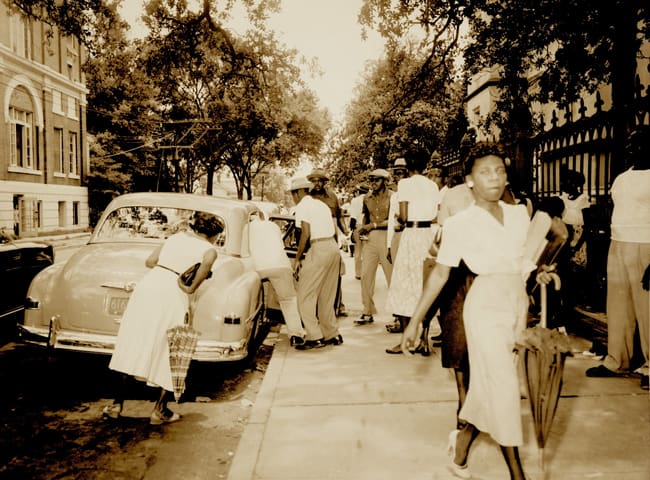
A historic photo from the 1953 Baton Rouge Bus Boycott
Breaking Barriers
Louisiana was the first state to integrate an entire school system. Ruby Bridges, Leona Tate, Gail Etienne and Tessie Prevost were only 6 years old in 1960 when they became the first Black students to attend previously all-white William Frantz and McDonogh 19 Elementary Schools in New Orleans. Federal marshals escorted the students to school past angry crowds.
Today, historical markers and Louisiana Civil Rights Trail markers outside the schools commemorate the integration. A statue of Ruby stands in the William Frantz school’s courtyard. Leona Tate purchased McDonogh 19, the school she integrated, and has turned it into a Civil Rights Museum and Education Center.
Today, the former McDonogh No. 19 school building houses The Tate Etienne and Prevost Center. Groups wanting to learn more about the Civil Rights Movement in New Orleans can visit The TEP Interpretive Center, now a renovated mixed-use facility that features education and exhibition space dedicated to the history of New Orleans Public School desegregation, Civil Rights and restorative justice. Visitors can book tours Monday through Friday and by appointment on weekends.
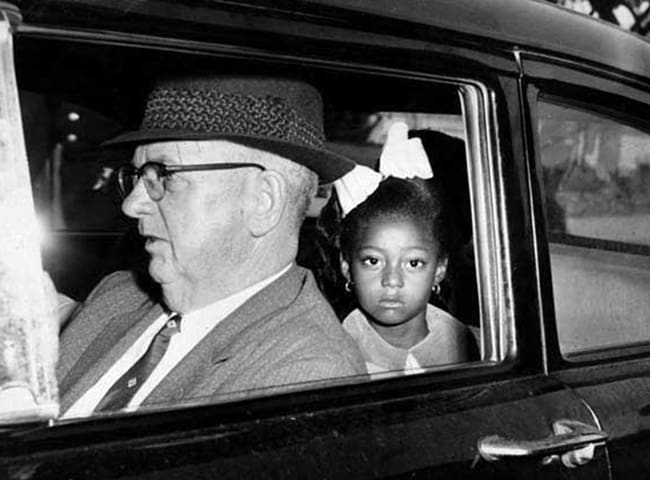
Six-year-old Gail Etienne being escorted by a federal marshal on the day she, Tessie Prevost and Leona Tate desegregated McDonogh 19 Elementary School
The Original Black Panthers
Louisiana also played a major role in the eventual desegregation of the United States military, and Camp Beauregard, near Pineville, is a significant location in the history of Black military service. From 1940 to 1944, Louisiana hosted a series of military maneuvers designed to train soldiers for all aspects of Army Ground Forces operations, and an estimated 75,000 Black soldiers maneuvered in Central Louisiana.
On April 1, 1942, the 761st Tank Battalion — an experimental unit similar to the Tuskegee Airman of Alabama — was formed at Camp Claiborne, about 25 miles south of Pineville. The 761st trained during the Louisiana Maneuvers and was attached to many commands in Europe throughout World War II. The battalion, known as the “Black Panthers,” became legendary for its fighting ability. The Black Panthers, became known as Patton’s Panthers, operated under General George S. Patton’s Third Army.
On July 26, 1948, six years after the formation of the 761st Tank Battalion, President Harry S. Truman signed Executive Order 9981 that mandated the desegregation of the U.S. military.
Today, the Louisiana Military Maneuvers Museum is housed in a replica World War II barracks at Camp Beauregard, a 12,500-acre Louisiana National Guard installation in Pineville. The museum pays tribute to service members and civilians of Louisiana, with portions of the collections dating back to Colonial Louisiana.
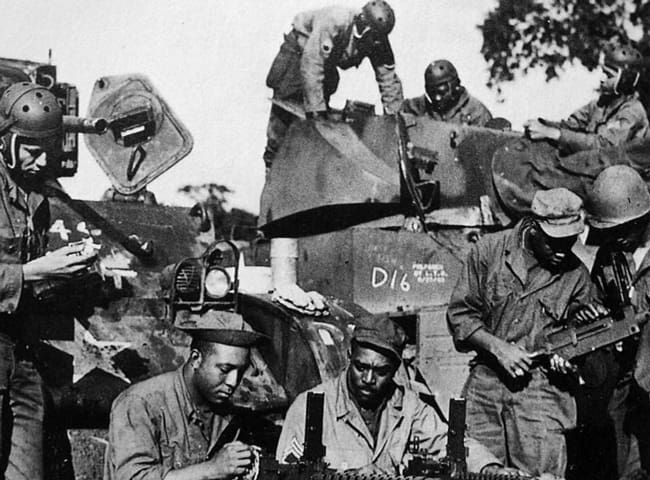
Members of the 761st Tank Battalion pictured at Camp Beauregard
Protecting Protesters
In another first, Louisiana was the first state where organizers established an armed guard to protect Black citizens and Civil Rights workers. The Deacons for Defense and Justice was founded in 1964 in the mill town of Jonesboro, Louisiana, to protect Civil Rights activists.
When the Congress of Racial Equality (CORE) arrived in Jonesboro during the 1964 Freedom Summer, the group tested segregation at public facilities and launched voting rights drives in the city. CORE’s freedom house became a target and CORE members were confronted. CORE asked for help. Earnest “Chilly Willy” Thomas and Frederick Douglas Kirkpatrick co-founded the Deacons for Defense and Justice to provide armed security for Civil Rights workers, and many Deacons members were Black World War II or Korean War veterans who believed in armed self-defense.
The Deacons for Defense and Justice protected members of CORE, as well as other activists and the wider Black community. The Jonesboro Deacons’ chapter also led a sophisticated organization campaign and eventually built a network of more than 20 chapters throughout Louisiana, Alabama and Mississippi.
A marker on the Louisiana Civil Rights Trail, located at the Deacons for Defense Park in Jonesboro, commemorates the group and its efforts to protect those doing the dangerous work to secure equal rights.
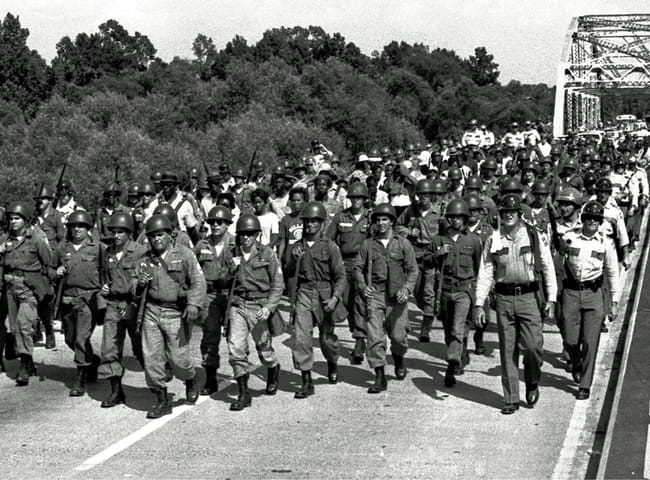
Many of the Deacons for Defense and Justice were Black World War II or Korean War veterans.
The “105-Mile Gauntlet”
Four years after the March on Washington, the Bogalusa Civil Rights March was the first organized Civil Rights march in Louisiana and the longest in U.S. history, winding 105 miles from Bogalusa southwest to Baton Rouge.
The march began on Aug. 10, 1967, with 25 people; by the time it arrived in Baton Rouge 10 days later, it had grown to over 600 people and 2,200 police and National Guardsmen. Led by Civil Rights activists A.Z. Young, Robert “Bob” Hicks and Gayle Jenkins, the march came to be known as the “105-mile gauntlet.”
The march ended on Aug. 20, 1967, when demonstrators arrived at the state Capitol. During a rally on the Capitol steps, Young delivered to the governor a list of grievances about employment discrimination and the election of 10 African Americans candidates running for local offices in Bogalusa. The march eventually led to better hiring and voting practices.
In Young Park, adjacent to the State Capitol in Baton Rouge, a Louisiana Civil Rights Trail marker commemorates the 105-mile march.
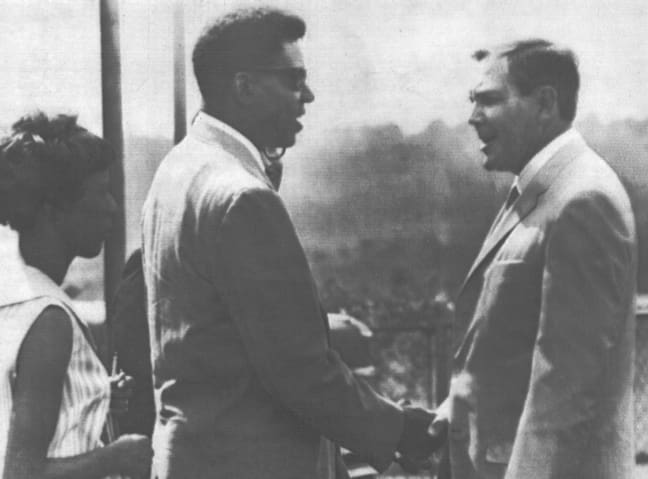
A.Z. Young, leader of the Bogalusa Civil Rights March, shaking hands with Louisiana Governor John McKeithen
Constantine v. SLI
The city of Lafayette is the site of another significant first in the Civil Rights Movement. Southwestern Louisiana Institute, now the University of Louisiana at Lafayette, became the first state-supported, previously all-white undergraduate college in the Deep South to desegregate.
In 1954, a class-action complaint was filed against the university after four Black students were denied admission the previous fall. The case, known as Constantine v. SLI, led to a federal court ruling in July 1954 that permanently prohibited refusal of admission based on race.
That same summer, Clara Dell Taylor became the first Black student to enroll at SLI, and another 80 Black students attended the university that fall. They also paved the way to desegregate Louisiana’s college athletes. Two years later, in 1956, the first Black student-athletes joined SLI’s track team, and two more Black student-athletes joined the basketball team in 1958.
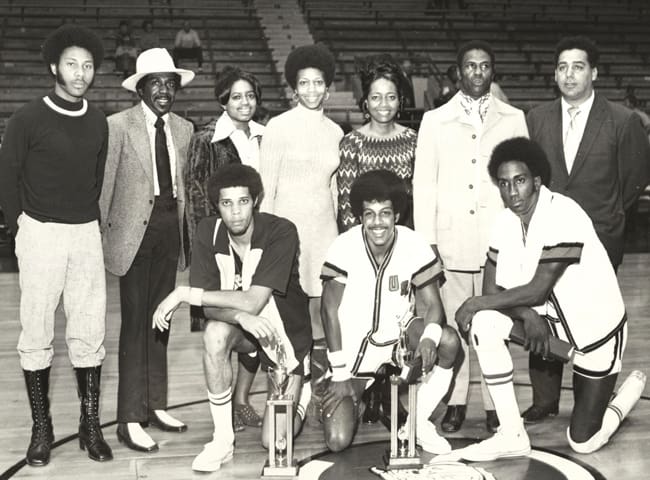
SLI led the way in the desegregation of Louisiana college athletics.
Segregated Service
Groups that want to walk in the steps of those who lived in the Jim Crow South can visit the Texas & Pacific Railway Depot in Natchitoches. The depot stands as one of the last remaining segregated buildings in Louisiana. There, visitors can walk through separate entrances for “White” and “Colored” passengers that lead to two separate waiting rooms, segregated not only by race, but also by different building materials.
The 1927 Italianate and Spanish Revival-style depot is a symbol of the Great Migration, when some 6 million African Americans from the Jim Crow South moved to industrial cities in the North and West between World War I and the 1970s, seeking better economic opportunities, better education access and a better future. Soon after the Civil Rights Act passed in 1964, passenger rail service ended in Natchitoches in 1965, so the depot was never integrated. By the early ’80s, the building was abandoned and sat empty until 2023. Today, it serves as the visitor center for Cane River Creole National Historical Park and interprets the separate waiting rooms. It is open for self-guided tours Wednesday through Sunday.
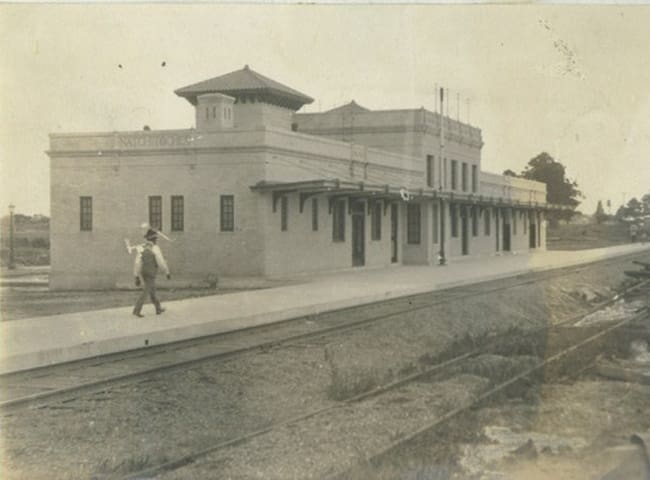
A historic photo of the Texas & Pacific Railway Depot
“Over a Bowl of Gumbo”
For another authentic and historic (and delicious) Louisiana experience, groups can dine at Dooky Chase’s Restaurant in New Orleans’ Tremé neighborhood. Dooky Chase’s opened in 1941 and soon became known for its jazz music, its Creole cuisine and its safe harbor for people of all races to gather and discuss civil and economic rights for African Americans in the city and throughout the country. Local and national Civil Rights leaders, activists and freedom fighters — including Thurgood Marshall, Oretha Castle Haley, A.P. Tureaud, Ernest “Dutch” Morial, Ralph Abernathy and Martin Luther King Jr. — all gathered in the restaurant’s upstairs dining room to have discreet discussions and hold strategy sessions over dishes of some of the city’s finest Creole food.
Chef Leah Chase, who owned the restaurant with her husband, Dooky, famously said, “I like to think we changed the course of America in this restaurant over a bowl of gumbo.” The couple often provided food at Civil Rights meetings and to demonstrators who had been arrested and jailed.
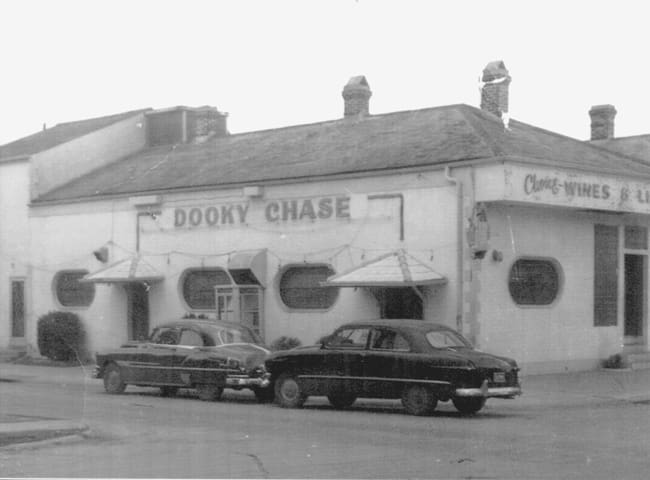
A historic photo of Dooky Chase’s Restaurant
New Zion Baptist Church
New Orleans is also where a group of religious and Civil Rights leaders would launch one of the Movement’s most influential organizations: the Southern Christian Leadership Conference (SCLC).
On Valentine’s Day in 1957, religious and community leaders gathered at New Zion Baptist Church on the corner of Third and Lasalle streets in New Orleans to sign the forms that made the organization official. They also established an executive board of directors and appointed 28-year-old Martin Luther King Jr. as president. The SCLC would go on to coordinate nonviolent action to desegregate bus systems across the South and would later tackle bigger issues of segregation nationwide.
Though the church is not open for tour groups, visitors will find a plaque mounted on the side of the building commemorating the SCLC’s work, and the SCLC Memorial Walkway Pavilion opened across the street from New Zion in 2019.
civilrightstrail.com/state/louisiana
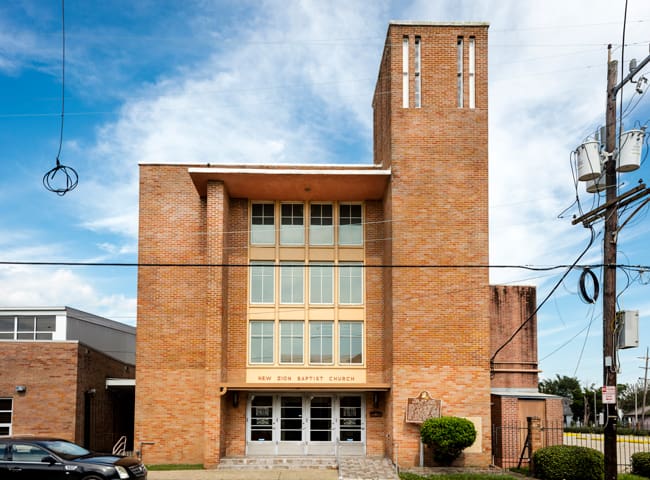
New Zion Baptist Church
You May Also Like
About Us

We're The Group Travel Leader, America's leading experts on all things group travel. Find hundreds of articles, podcasts and other free resources for your group travel program here.
The Latest Issue
Stay Connected!
Get the Group Travel Minute e-newsletter twice a month.