


Texas Sparkle
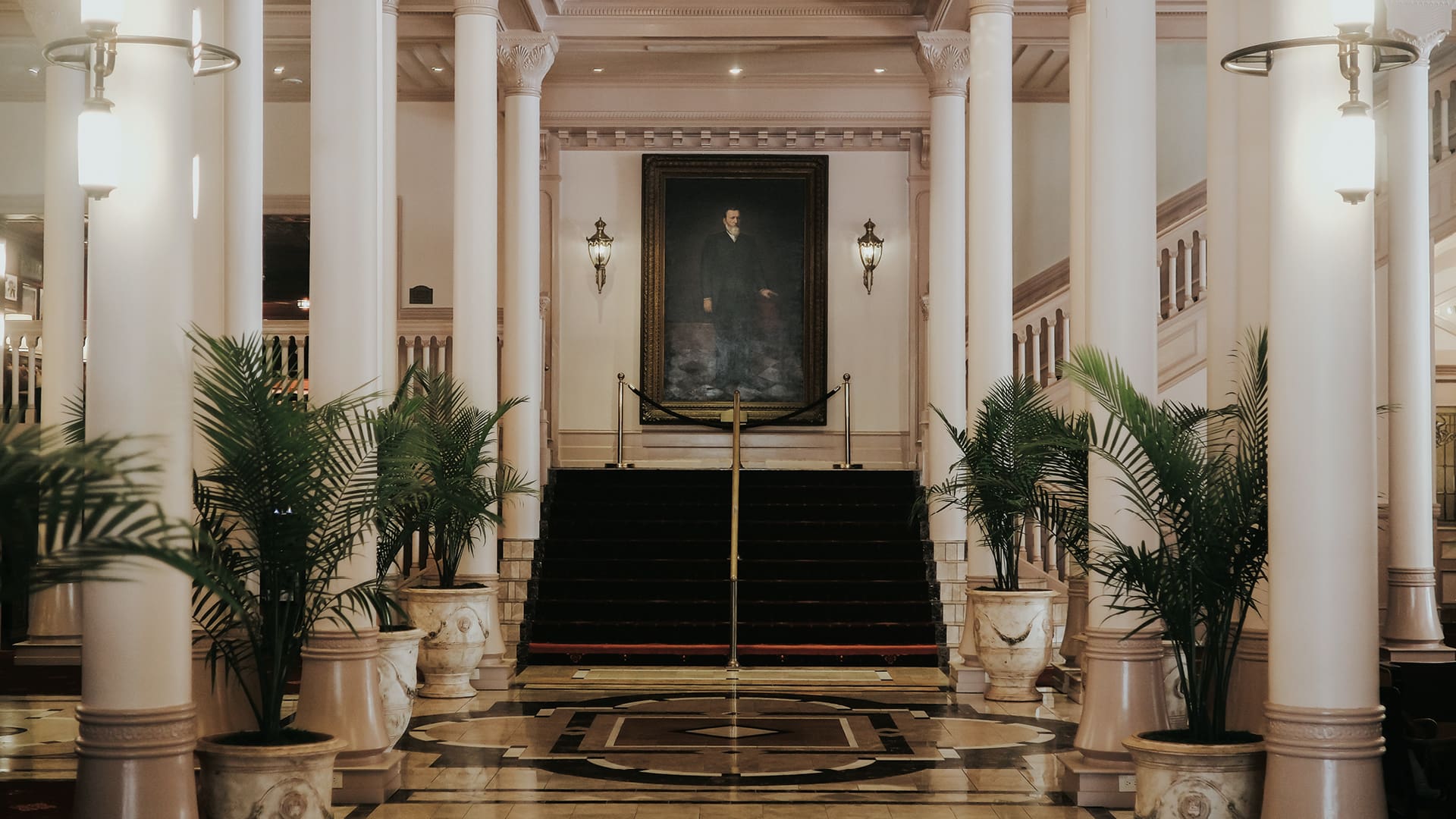
Courtesy The Driskill Hotel
Everything is bigger in Texas, and it’s that bigness that could easily overwhelm a tour planner’s brain. Texas may simply be too big to take in — geographically, historically and culturally. Every part of the state offers myriad reasons to visit. Here are some building blocks for group itineraries through the Lone Star State.

Popular Demand
Palo Duro Canyon
Texas isn’t just wide — it’s deep, too, proven at Palo Duro Canyon near Amarillo. It’s America’s second-largest canyon at 120 miles long, 20 miles wide and 800 feet deep. Only the Grand Canyon is grander. Palo Duro Canyon State Park is the key to seeing a bit of the park, where multihued strata and formations expose 250 million years of geology. The Depression-era Civilian Conservation Corps built the route to the park’s El Coronado Lodge Visitor Center.
Amon Carter Museum of American Art
What began as an impressive museum of Western art with works by Frederic Remington, Charles Russell and others evolved into Fort Worth’s Amon Carter Museum of American Art, one of the nation’s most notable collections of original American works. Beyond Remington and Russell are John James Audubon, Grant Wood, Winslow Homer, Stuart Davis, Dorothea Lange, Georgia O’Keeffe and many more. The museum is a legacy to its founding collector, Amon Carter, publisher of the Fort Worth Star-Telegram and founding board member of American Airlines.
National Museum of the Pacific War
The National Museum of the Pacific War in Fredericksburg continues to expand its storytelling from World War II. A major renovation of the George H.W. Bush Gallery in 2025 included a multisensory immersive event called “The Rescue.” Groups can follow along with the story of a humanitarian rescue of civilians in the Philippines by the crew of the USS Crevalle, a submarine. The tour ends in a submarine simulation mimicking everything from dodging enemy attacks to the spray of the sea. The rescue included retrieval of secret Japanese battle plans that went straight to Adm. Chester Nimitz, commander of the U.S. Pacific Fleet who was also a Fredericksburg native.
Up and Coming
Sea Turtle Inc.
A renovation and expansion project transformed Sea Turtle Inc. on South Padre Island into what the nonprofit conservation organization labels the largest enclosed sea turtle hospital in the world. Self-guided tours through the 15,000-square-foot hospital allow visitors to learn about sea turtle conservation, rescue, rehabilitation and release. Sea Turtle Inc. responded to nearly 1,400 emergency calls and rehabilitated more than 730 turtles in 2025. Among the resident turtles (ones that would not survive in the wild) are educational turtles named Cowboy, Poppy and Hang Ten. Each has a harrowing survival story.
San Antonio Zoo
The San Antonio Zoo’s newest attraction is big; Congo Falls is a 2-acre habitat designed to replicate the multilevel environment of the African jungle. Its highlight is the 70-foot-tall Silverback Peak, a climbing tower for gorilla residents Ajari, Anaka and Andi to ascend for a panoramic view of the San Antonio skyline. The zoo says the tower is the first of its kind in the world. Construction of Congo Falls uncovered limestone that supplied stone for construction of the Alamo more than 300 years ago.
Women of the Navy
The aircraft carrier USS Lexington, “the Lady Lex,” is an appropriate location for “Women of the Navy,” a major and ever-expanding exhibit. The Lexington, anchored in Corpus Christi since 1992, opened the exhibit in 2025. The Lexington was the first aircraft carrier with female sailors and the first ship where a woman naval aviator landed a jet. The exhibit begins with 1908’s Naval Nurse Corps and continues to today’s sailors. Holographic displays allow real sailors to tell their own stories.

Overnight Sensations
Flying L Resort
The Flying L Resort can be home base for exploring the famous Texas Hill Country. The resort is in Bandera, known as “the Cowboy Capital of the World,” in a region of rolling hills, small towns, towering oak trees and picturesque streams. The resort itself is along a stretch of the San Julian Creek. Lodging includes cabins, villas and two lodges, each with 10 bedrooms with en-suite bathrooms. The resort’s amenities include a 6,646-yard golf course and Buck Shannon, the resort’s cowboy balladeer.
The Driskill Hotel
Downton Austin is a happening place, and The Driskill Hotel has been a witness to or the actual location of landmark events in the state capital’s history. The property began in 1886 as the dream of cattle baron Jesse Driskill. His $400,000 investment ($92 million in today’s world) set a standard for hospitality that still thrives in the current 189-room incarnation of the hotel. A life-size portrait of Driskill overlooks the lobby. A room was permanently reserved for President Lyndon Johnson, and the White House press corps worked out of the Driskill when Johnson visited.
Memorable Meals
Harvest Hall
Harvest Hall in Grapevine (smack dab in between Dallas and Fort Worth) makes it easy for a picky group to dine. Eight chef-driven local restaurants with common seating are under one roof. Cuisine choices include Latin street food, scratch-made Italian pizzas and pastas, modern Mediterranean fare, Gulf seafood and, yes, Texas barbecue. Harvest Hall’s neighbors within walking distance include the group-friendly Grapevine Vintage Railroad, specialty shops along Main Street, and Hop and Sting Brewing Co.
Gaido’s Seafood
Gaido’s fish-shaped logo marks it as a favored Galveston seafood restaurant, and the James Beard Foundation has cemented that reputation by giving the 115-year-old restaurant its American Classic Award. Only six restaurants across the U.S. got that recognition in 2025. The James Beard Foundation says American Classics, all independently owned, have timeless appeal and are “beloved in their region for food that reflects the character and cultural traditions of its community.” Italian immigrant San Giacinto Gaido started the restaurant in 1911, and Gulf-caught shrimp and red snapper are still favorites today.

Tom Adkinson
Nashvillian Tom Adkinson continues his multi-decade career in travel journalism and travel publicity as an independent writer with time to roam. He particularly enjoys researching stories that include history, interesting personalities and the outdoors, especially destinations where trout hang out. He is a Marco Polo member of the Society of American Travel Writers.
You May Also Like
About Us

We're The Group Travel Leader, America's leading experts on all things group travel. Find hundreds of articles, podcasts and other free resources for your group travel program here.
The Latest Issue
Stay Connected!
Get the Group Travel Minute e-newsletter twice a month.