


Signature Stops in America’s Heartland
Courtesy Grand Hotel
Many destinations have admirable attractions, but only a few experiences become so closely identified with a place that a visit feels incomplete without them. These signature experiences reflect the character, history and traditions of their destinations while giving groups something they simply can’t experience in quite the same way anywhere else. Here are five must-see experiences across America’s Heartland worth building into an itinerary.
Sandhill Crane Migration
Platte River Valley, Nebraska
It’s a once-in-a-lifetime experience that, miraculously, happens every year: Each March, roughly 1 million sandhill cranes stop in central Nebraska’s Platte River Valley to rest and refuel before continuing their northward migration. The birds begin arriving in February, with numbers generally peaking in mid-to-late March, when the broad, shallow Platte hosts one of the largest gatherings of cranes in the world. Versions of this journey have happened for ages; fossil evidence places sandhill cranes in Nebraska even before the formation of the Platte River approximately 10,000 years ago.
Forage, fly, sleep, repeat — at dawn, the cranes leave the river to feed in nearby cornfields, meadows and alfalfa fields. During their monthlong stay, each bird can gain as much as a pound of fat needed for the journey ahead. The fields are also where visitors may see the cranes’ elaborate courtship dances, which include moves like bowing with wings outstretched, leaping into the air and sometimes repeatedly tossing a stick or corncob. By dusk, the flocks return to the Platte, where they roost standing in water about six inches deep. In particularly crowded sections, more than 12,000 cranes can gather along a half-mile stretch of river.
Groups can watch the spectacle from several locations along the valley. The Crane Trust Nature & Visitor Center in Wood River offers guided morning and evening viewing-blind tours, as well as an open-air footbridge tour as the cranes return to roost. At Rowe Sanctuary in Gibbon, guided sunrise and sunset tours also bring visitors to riverfront blinds. Public viewing decks and the hike-bike trail bridge at Fort Kearny State Recreation Area offer additional vantage points.
Because it’s a wildlife experience, the schedules and numbers of birds will vary with weather and migration conditions. March is the primary viewing month, and reservations for lodging, transportation, restaurants and guided experiences should be made as far in advance as possible.
Mackinac Island & Grand Hotel
Mackinac Island means leaving the cars behind. Most visitors travel by ferry from Mackinaw City or St. Ignace, parking on the mainland before crossing the Straits of Mackinac. Automobiles have been prohibited on the island since 1898, and visitors travel primarily on foot, by bicycle or via horse-drawn carriage.
Carriage tours provide groups with an introduction to both the island and its history. Mackinac Island Carriage Tours’ narrated public tour lasts about one hour and 45 minutes and travels through Mackinac Island State Park. It includes several of the island’s best-known sights, stopping at Arch Rock and Fort Mackinac before passing the Grand Hotel.
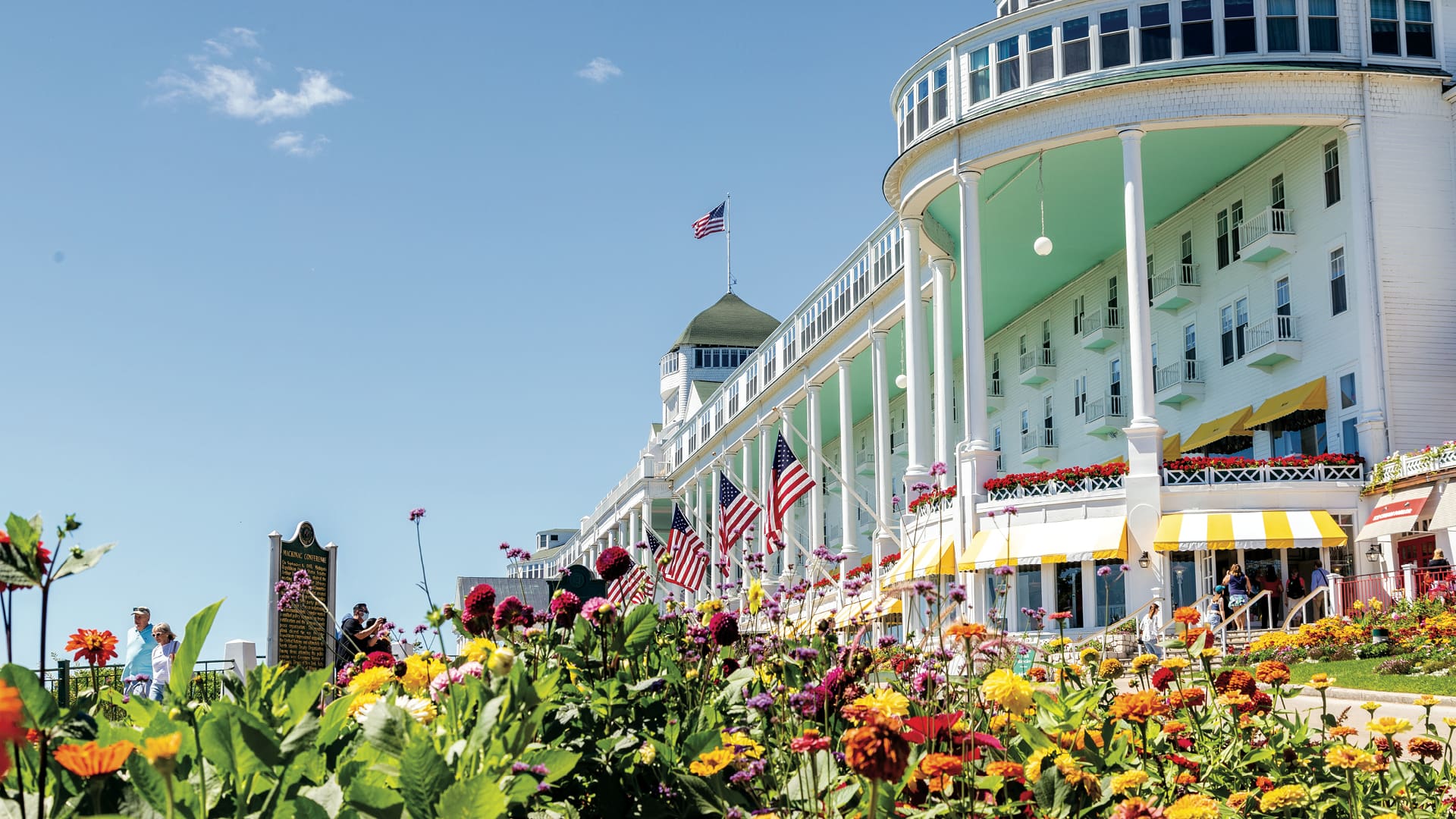
Grand Hotel has been part of the island landscape since 1887. Perched above the water, the sprawling white hotel is known for its 660-foot front porch, which the hotel bills as the world’s longest. Its traditions remain central to the guest experience, from afternoon tea and live music to formal dinner and evening dancing. After 6:30 p.m., elevated evening attire is required in the hotel’s main public areas.
Grand Hotel warmly welcomes tour groups. Programs can incorporate historic carriage rides, afternoon tea, dinner in the Main Dining Room and dancing in the Terrace Room. Combine a carriage tour with time at the hotel and in the charming, walkable downtown.
Minnesota State Fair
St. Paul, Minnesota
The Minnesota State Fair began in 1859, one year after Minnesota achieved statehood, and is now central to the state’s identity. What began as an agricultural exposition has grown into a 322-acre, 12-day event combining agriculture, food, music, rides, art and entertainment. “The Great Minnesota Get-Together,” as it’s known, ends on Labor Day and drew nearly 2 million visitors in 2026.
Agriculture remains the beating heart of the fair, although livestock exhibitions, crop competitions and educational programs now share the grounds with concerts, midway attractions, fine art and hundreds of vendors. In 2026, agricultural and creative competitions received more than 38,000 entries, including livestock, baked goods, canned foods, vegetables, flowers, fine art and crafts. The CHS Miracle of Birth Center welcomed 160 newborn animals during the fair.

Food is a fair attraction in its own right, and eating is one of the easiest ways for visitors to explore the grounds. More than 1,600 menu items are sold around the fairgrounds, with new offerings introduced every year. In addition to traditional fair fare, Minnesota is famous for its multitude of foods — nearly 100 items — served on a stick. The new favorite in 2026 was Sligo Slider Bites On-A-Stick: deep-fried dumplings filled with beef, cheddar, pickle and onion, served with Thousand Island dressing.
One of the fair’s most distinctive traditions takes place inside the Dairy Building, where Princess Kay of the Milky Way — Minnesota’s annual dairy-industry goodwill ambassador — and nine other dairy-princess finalists have their likenesses carved from 90-pound blocks of butter. The sculptures are created in full view of fairgoers inside a rotating glass cooler kept at 40 degrees. Princess Kay’s portrait takes two days to complete, followed by one finalist each day through the rest of the fair.

Indy 500
Indianapolis
The Indianapolis 500 is the largest single-day sporting event in the world, and spectators don’t have to be racing fans to appreciate the spectacle. Since 1911, Memorial Day weekend in Indianapolis has revolved around the Indy 500. Thirty-three drivers compete for 200 laps around the 2.5-mile oval at Indianapolis Motor Speedway, covering 500 miles before a winner crosses the finish line. More than 300,000 spectators attend the race, and the entire city explodes with parties, parades, marathons and other race-related festivities during the month of May.
The event itself is surrounded by traditions that have accumulated over more than a century. Pre-race ceremonies include a patriotic salute, the singing of “Back Home Again in Indiana” and the command for drivers to start their engines. After the race, the winner receives a floral wreath and the traditional bottle of milk, and the champion’s likeness is eventually added to the trophy. The race itself generally lasts about three hours, but groups should plan for a much longer day to accommodate traffic, parking and pre-race activities.
Indianapolis Motor Speedway is also accessible to groups outside of race weekend. The reimagined Indianapolis Motor Speedway Museum is open nearly year-round, with exhibitions devoted to the history of the track, its drivers and racing. Visitors can add a track tour for access to parts of the Speedway that are normally seen only from a distance. Depending on what’s scheduled at the track that day, tours may include a lap of the 2.5-mile oval; a look at the start-finish line; a visit to the Pagoda, the multistory race-control and media tower overlooking the track; and a stop by Gasoline Alley, the garage area where race teams prepare their cars and move between the garages and pit lane.
Chicago Architecture Cruise
Chicago
Few cities are better viewed from the water than Chicago. Its namesake river runs directly through downtown, giving boat passengers unobstructed views of legendary architecture that’s difficult to achieve from street level. Consequently, architecture cruises are one of the city’s signature visitor experiences, and viewing the city from the Chicago River and Lake Michigan is an experience not to be missed.
City Cruises Chicago offers its Seadog River & Lake Architectural Tour, a 75-minute narrated excursion that combines the Chicago River with Lake Michigan. The cruise passes downtown skyscrapers and historic buildings while narration covers the city’s architectural legacy. The route travels from the lakefront through the Chicago Harbor Locks and along the river toward Willis Tower — Chicagoans will always call it Sears Tower — and then takes a short jaunt on Lake Michigan for a spectacular view of the skyline.
From the river, passengers can watch more than a century of Chicago architecture unfold along both banks, from the ornate Wrigley Building and Tribune Tower to the sculptural concrete of Marina City and the city’s newer glass-and-steel skyscrapers.
Tours may depart from Navy Pier or the Chicago Riverwalk, depending on availability. A number of companies offer architecture cruises: Chicago’s First Lady, Chicago Line Cruises, Shoreline Sightseeing and Wendella Tours & Cruises all offer their own versions, with different routes, vessels and tour lengths.

Cynthia Barnes
Cynthia Barnes is a Colorado-based travel writer who has written for the Boston Globe, Food & Wine, Toronto Star, and National Geographic, among other publications. She loves dives (both scuba and bars), baseball (Cubs), spicy food, and exploring the world.
You May Also Like


About Us

We're The Group Travel Leader, America's leading experts on all things group travel. Find hundreds of articles, podcasts and other free resources for your group travel program here.
The Latest Issue

Stay Connected!
Get the Group Travel Minute e-newsletter twice a month.